Written 23/2/26
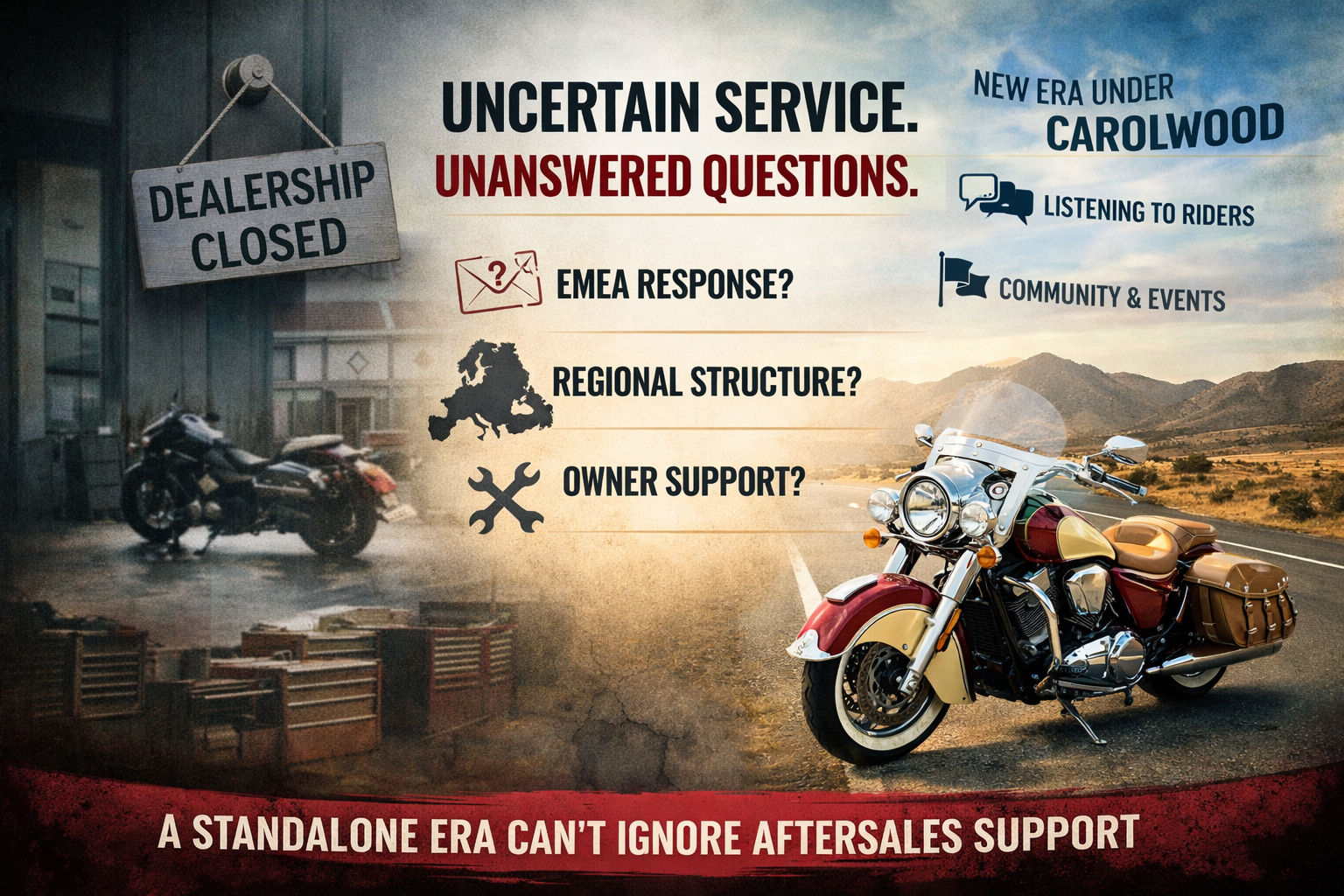
Indian Motorcycle’s transition into a stand-alone company under Carolwood marks one of the most significant structural moments in the brand’s modern history.
There are positive signs.
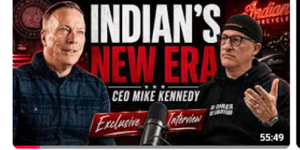
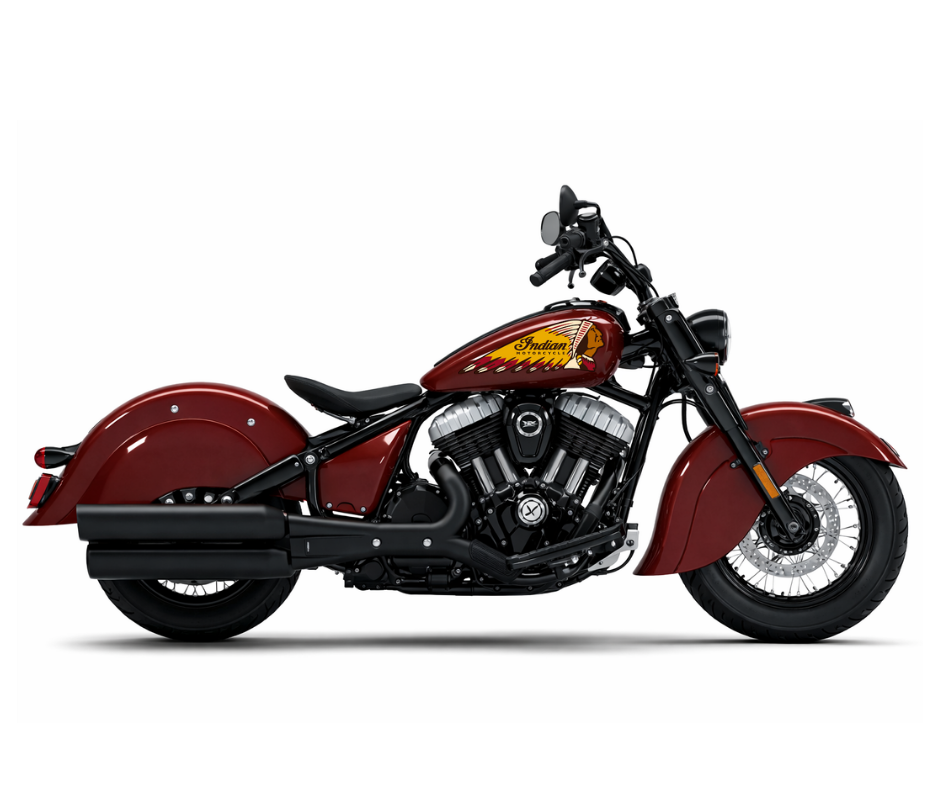
The release of the new Vintage this month signals product confidence. Public interviews and discussions with Mike Kennedy have emphasised listening to owners, reconnecting with grassroots events, and strengthening the community-first identity that has always defined Indian Motorcycle at its best.
That direction is welcome.
A brand that listens to its riders is a brand that grows.
But listening must translate into structure.
A UK Dealer Question — And Why It Matters
IMRGlobal has received confirmed reports from riders that a UK dealership has informed customers it is no longer supporting the Indian Motorcycle brand.
When contacted directly, the dealership declined to comment on its current status.
We are not naming the business at this stage, as we have formally requested clarification from Indian Motorcycle UK via the EMEA media office and are awaiting a response.
Dealer networks evolve. Commercial agreements change. That in itself is not unusual.
However, when a dealership in the UK potentially steps away from the brand, the impact is immediate for owners in that region:
• Increased travel time for servicing
• Reduced local warranty access
• Greater pressure on neighbouring dealers
• Uncertainty at the start of the riding season
This is not speculation. It is the practical consequence of reduced dealer density.
And it highlights a wider structural issue that IMRGlobal has already addressed.

Enthusiasm Is There — Infrastructure Must Follow
Indian motorcycles remain aspirational machines. Events are growing. Community engagement is strong. Interest in the brand is high.
Yet ownership depends on something very simple:
Accessible, reliable service support.
Many riders will travel significant distances to purchase the right motorcycle.
Far fewer are willing — or able — to travel several hours repeatedly for routine servicing or warranty work.
When service access becomes difficult, purchasing decisions change. Delays increase. Confidence drops. Retention weakens.
This is not a UK-only issue. Across parts of Europe, North America and rural regions globally, extended travel times for authorised servicing already affect ownership practicality.
If dealership coverage contracts in any region without alternative support structures, that friction increases.
The Opportunity of the Stand-Alone Era
The transition under Carolwood presents an opportunity to rethink structure.
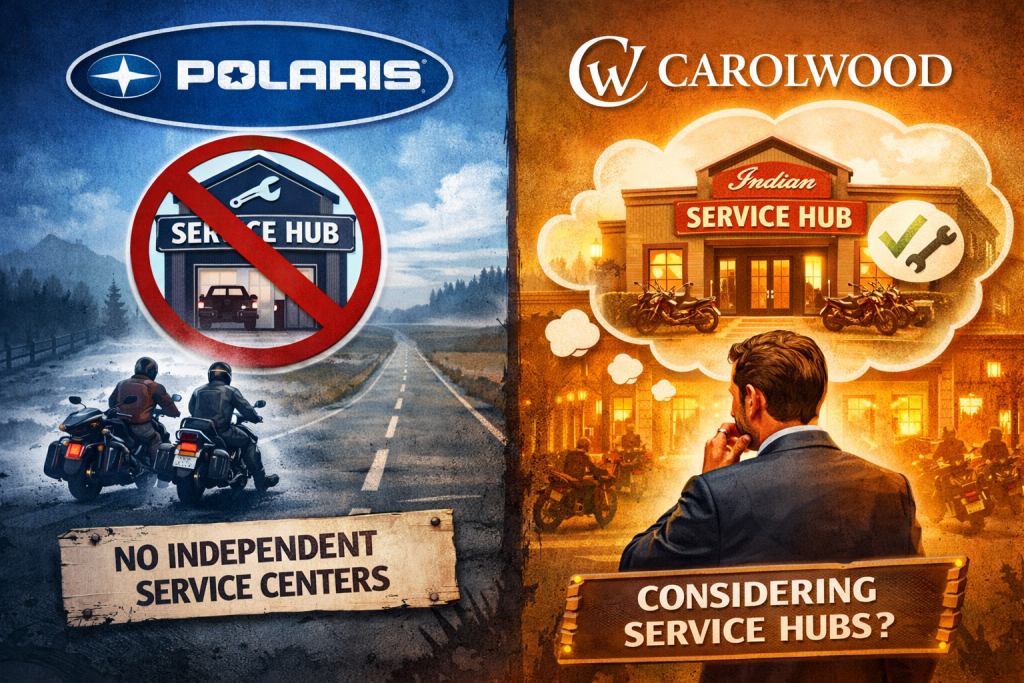
Under previous policy, service remained tightly bound to full dealerships. Independent workshops, regardless of experience, were excluded from authorised warranty pathways.
In a stand-alone era defined publicly by agility and closer owner engagement, that model deserves review.
A structured Service Hub programme — accredited, audited, and manufacturer-supported — could:
• Expand regional service coverage without requiring full retail dealerships
• Reduce excessive travel times for owners
• Support existing dealerships during network adjustments
• Maintain warranty integrity under controlled standards
• Strengthen long-term ownership confidence
This is not about replacing dealerships.
It is about ensuring that dealership fluctuations do not translate directly into service gaps.
Grassroots Engagement Must Be Matched by Aftercare
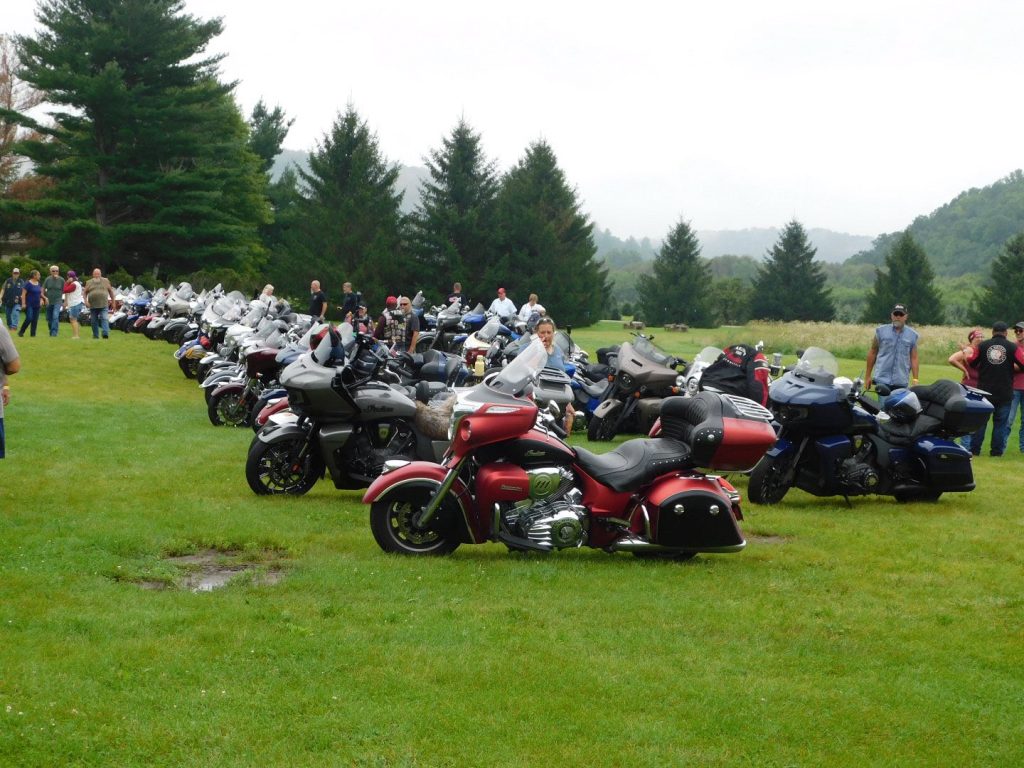
Mike Kennedy’s recent messaging around listening to owners and increasing grassroots involvement has been clear and encouraging.
Greater engagement at rider-led events, stronger community presence, and a more direct relationship with owners can only benefit the brand.
But grassroots engagement must be matched by aftersales structure.
Owners judge a brand not only at launches and events — but when:
• A service light appears
• A recall notice arrives
• A diagnostic fault needs resolving
If the stand-alone era is to deliver sustainable growth, ownership must remain practical as well as desirable.
Communication Builds Confidence
On 20 January 2026, IMRGlobal published a detailed Service Hub proposal outlining how a tiered, licensed service framework could strengthen Indian Motorcycle’s ownership model globally.
On 10 February 2026, we formally contacted Ian in the media team at Indian Motorcycle EMEA seeking clarification on:
• How the Carolwood stand-alone structure applies within EMEA
• Dealer continuity and governance
• Aftersales direction under the new ownership model
• Whether service hub concepts are under consideration
At the time of writing, no response has been received.
Following recent reports of potential UK dealership changes, we have again sought clarification through the EMEA media office. As of today, there has been no dialogue opened on either matter.
This is not presented as confrontation.
It is presented as context.
If the stand-alone philosophy is built on listening and closer owner engagement, then clear regional communication is essential — particularly when dealer network questions arise.
Owners should not rely on informal conversations to understand structural changes.
They should have visibility.
Communication builds confidence.
Confidence builds trust.
Trust builds retention.
The Practical Reality
If even one UK dealership withdraws from the brand, the immediate question becomes:
How is service access maintained for the affected region?
If multiple dealerships adjust over time, the same question scales.
Without a service hub model or similar structure, dealership contraction directly increases travel times. Extended travel times reduce ownership practicality. Reduced practicality affects future sales.
The future may indeed be bright.
Product investment appears strong.
Community messaging is positive.
The brand is receiving renewed attention.
But structural resilience will determine whether that momentum translates into sustained growth.
IMRGlobal’s Position
IMRGlobal will continue to:
• Seek clarification through official channels
• Report verified dealer developments responsibly
• Advocate for structured service accessibility
• Support constructive dialogue between brand and riders
The question raised by this potential UK dealership change is not simply about one location.
It is about whether service infrastructure evolves alongside ambition.
Motorcycles generate desire.
Service accessibility sustains loyalty.
For the stand-alone era to fulfil its promise, both must move forward together.