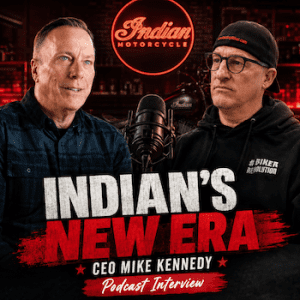
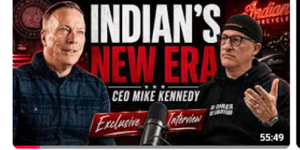
This is a breakdown of the exclusive interview between Indian Motorcycle CEO Mike Kennedy and Ryan Urlacher of the Law Abiding Biker podcast, episode LAB-430, published 20 May 2026. The full video is linked at the bottom of this page. We strongly recommend watching it in full.
Some interviews inform. Some entertain. Occasionally one comes along that genuinely matters — not just for what is said, but for what it reveals about where a brand is heading and whether the person leading it actually understands the community they are serving.
The Law Abiding Biker interview with Mike Kennedy is one of those. Over the course of a wide-ranging, candid, and often genuinely funny conversation, Indian Motorcycle’s new CEO said things that no Indian Motorcycle CEO has said publicly before. About Harley-Davidson. About the trike market. About the aftermarket. About the dealer network. About what it means to run a motorcycle company when you actually ride motorcycles.
IMRGlobal has broken the interview down section by section — with dedicated features to follow on several of the subjects Kennedy raised. But first, a word about the man who conducted it.
Who Is Ryan Urlacher and Why Does This Platform Matter?
If you are not already familiar with Law Abiding Biker, you should be.
Ryan Urlacher started in 2013 with nothing more than a microphone and an iPad, sitting in his daughter’s closet to muffle outside noise. His goal was simple — he had got into motorcycles in his thirties and found the whole world around them unnecessarily mysterious and intimidating. Dealers told him he needed special tools for everything. The internet was full of conflicting advice. He decided to do something about it.
Today Ryan is a biker, podcaster, filmmaker, blogger, and entrepreneur — and Law Abiding Biker has grown into one of the largest American V-twin motorcycle media platforms in the world, with over 450 podcast episodes since 2013 and a YouTube channel with hundreds of free videos covering everything from ride reviews and gear to motorcycle law, industry news, and rider culture.
Ryan Urlacher also has extensive experience as a police motorcycle officer and trainer — a detail that explains both the grounded, no-nonsense approach he brings to every interview and the genuine credibility he carries within the riding community. When Mike Kennedy chose Law Abiding Biker as the platform for his most detailed public interview since taking the CEO role, it was not an accident. This is a channel built by riders for riders, with an audience that asks the questions the industry actually needs to answer.
The Man in the Chair
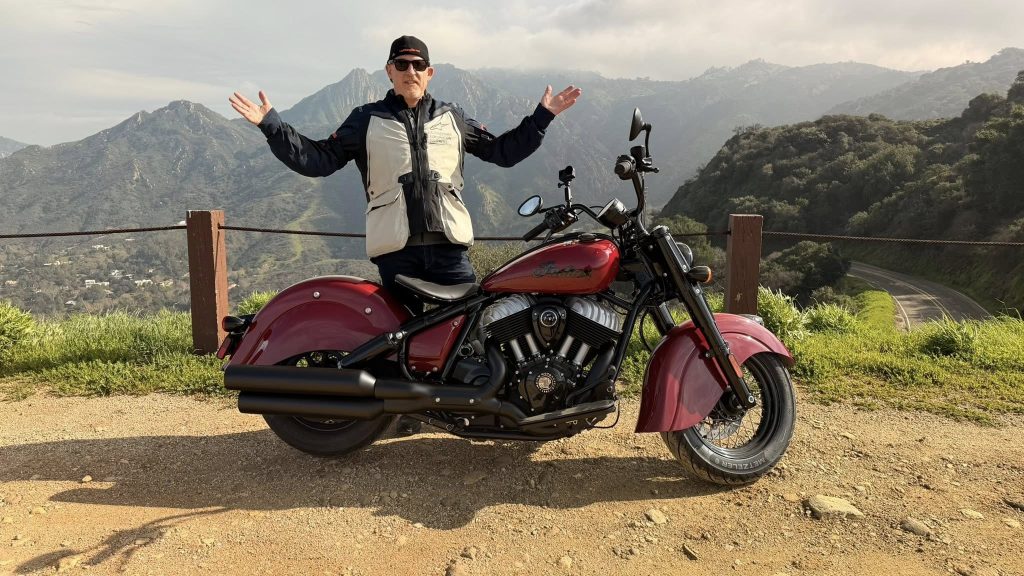
Mike Kennedy is a longtime motorcycle industry executive who became CEO of Indian Motorcycle following the brand’s separation from Polaris and acquisition by Carolwood LP. He brings more than 30 years of powersports experience to the role — including leadership positions as CEO of RumbleOn, CEO and President of Vance & Hines, and a 26-year career at Harley-Davidson. Industry observers view him as a motorcycle-focused executive with deep experience in dealer networks, aftermarket performance products, and brand development.
But the numbers only tell part of the story. Kennedy has been riding since he was twelve years old. His father put him on a Yamaha single-cylinder street bike and they rode it in fields because there was nowhere legal to ride. That early start set a direction that has never changed. By the time he was out of college he was at Harley-Davidson, and within two or three weeks of starting his boss threw him the keys to a Road King demo and told him to put some miles on it over the weekend.
Since taking over Indian in 2026 he has emphasised strengthening rider experience, dealer support, performance innovation, and expanding the brand’s global relevance while preserving its historic American heritage. In this interview — his most detailed and candid to date — he explained exactly what that means in practice.
“I’m going to bring a rider mindset to this role. I’m riding our product every weekend. I’m riding it to work. If the product is not operating as it should, my hair’s going to be on fire and my team’s going to know about it. We’re going to build a rider culture in Indian Motorcycle Company.”
Why He Left Harley — and Why He Came to Indian
Kennedy was direct about his Harley exit. He did not leave on his own terms. “I was exited out of Harley. Probably because I was too pro-dealer and the culture at the time was not pro-dealer.”
He went on to BRP, then took over Vance & Hines as CEO — where he worked alongside Terry Vance himself and described trying to keep pace with one of the motorcycle industry’s most brilliant entrepreneurial minds as genuinely challenging. Then came RumbleOn, the large-scale powersports retail group, where as a dealer he experienced Indian Motorcycle from the other side of the counter.
When Carolwood came calling about the Indian CEO role, he did not hesitate. His wife told him he had spent his entire career preparing for exactly this moment. Having competed against Indian on track, watched the brand develop under Polaris, and sold Indian motorcycles as a dealer, he felt he had seen every angle that mattered.
The appeal was straightforward. “We’re 900 employees and our sole focus and sole purpose is Indian Motorcycle Company. You make decisions differently than you do when you’re 7% of a ten-billion-dollar company. You bring different energy, different thought process, different mindset, better connection with the rider, closer to our dealers. And that in itself creates a ton of excitement and opportunity.”
The Strategy — Four Categories, No Distractions
Kennedy was unambiguous about Indian’s product direction. Four categories. No compromise. No distraction.
Cruisers. Baggers. Touring. And very soon — trike.
No EVs. “The technology is not there. Our riders aren’t interested in that.” No entry-level overseas bikes. “I wouldn’t like that bike. Our dealers wouldn’t like that bike.” No FTR revival — Kennedy addressed this directly and with clarity. The FTR was a significant investment by Polaris. Kennedy suggested that returning focus to that segment would distract from Indian’s core commercial opportunities.
The Scout at under $10,000 MSRP is the accessible entry point into the brand. The pre-owned market is another important gateway for new riders. But the core commercial ambition is in the bagger and touring segments — the biggest segments in North America, the most important to dealers, and the area where Kennedy believes Indian has the most room to grow.
“When you look at the global markets in those categories, the upside for our brand is immense. Like, we can grow our company beyond probably what we’re dreaming of today. And we’ve got big dreams.”
ARO — American Racing Operations
IMRGlobal has published a dedicated feature on ARO — read it here. [link]
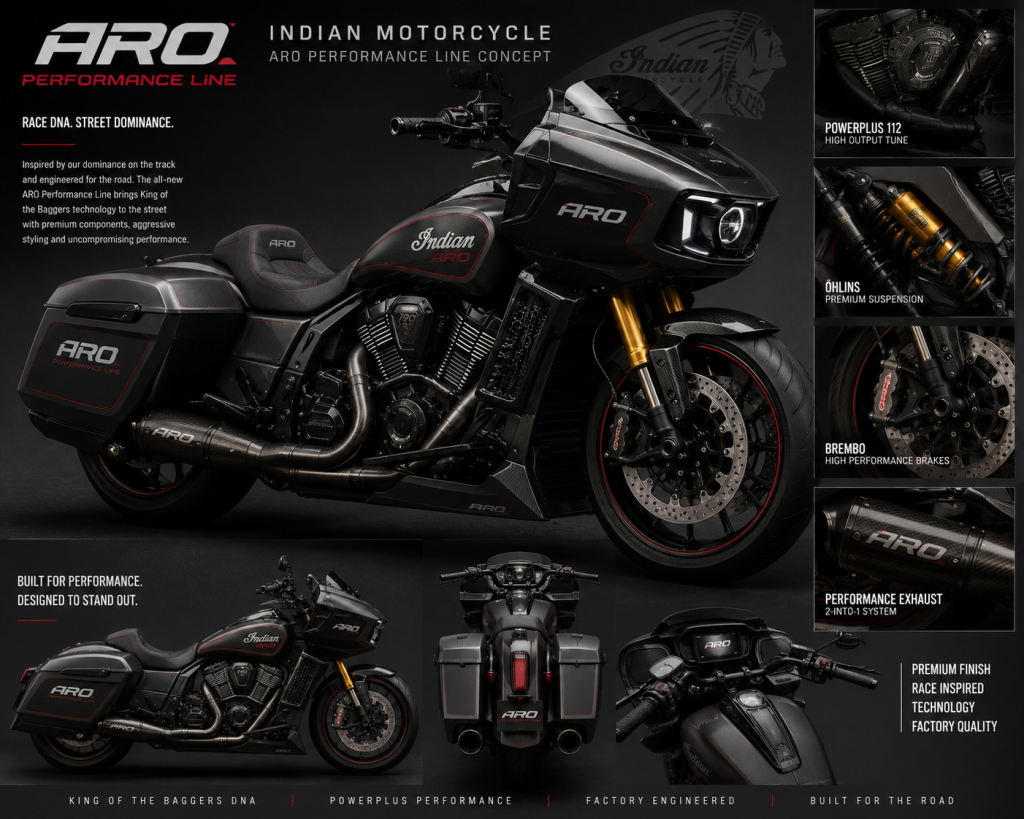
The performance sub-brand that many Indian owners have been waiting for is expected to launch around the Elkhart Lake race weekend with an announcement on Wednesday 27 May. Check out our story on the ARO announcement here, https://imrglobalofficial.com/2026/05/23/from-the-ceos-own-mouth-aro-is-coming-to-indian-motorcycle/ . Kennedy and his team are riding there from Indian’s Minneapolis headquarters — arriving on motorcycles, not in cars.
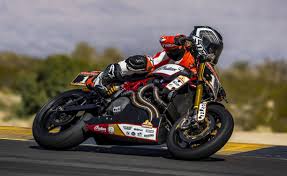
ARO — pronounced Arrow — is a performance sub-brand sitting underneath the Indian Motorcycle Company umbrella. Kennedy drew the comparisons himself. Screaming Eagle. AMG. BMW M Division. The launch will be product-led with exhausts and air intakes in the opening range, but the vision extends to ARO-branded motorcycles and eventually ARO-branded services.
“I love ARO. I think it’s so exciting. This is much bigger and broader than just a product. It will blossom into a full grown motorcycle at some point in the future.”
The Trike — Coming Sooner Than You Think
IMRGlobal will publish a dedicated feature on the Indian Motorcycle trike programme. Watch this space.
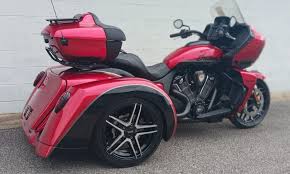
There is effectively one dominant manufacturer in this heavyweight American touring trike segment. Kennedy’s position is simple — they need a competitor, Indian’s riders want it, Indian’s dealers want it, and the brand is set up for it.
He was careful not to announce a specific date. But he was not careful about his enthusiasm. His engineering team was already studying the segment before he arrived — “I simply poured a bunch of gasoline on that small fire.” Indian will have a development partner to accelerate the timeline. And crucially — Kennedy has already ridden a prototype.
“Not three to four years from when I first said it. Not next Tuesday. But somewhere in between. And when people see what we come to market with, they’ll be impressed with the timeline. But more importantly, they’re going to be impressed with the product. I’ve ridden a prototype already and I’m super impressed.”
A full feature on what this means for Indian Motorcycle and the trike market is coming on the IMRGlobal website.
King of the Baggers — The Race That Sells Bikes
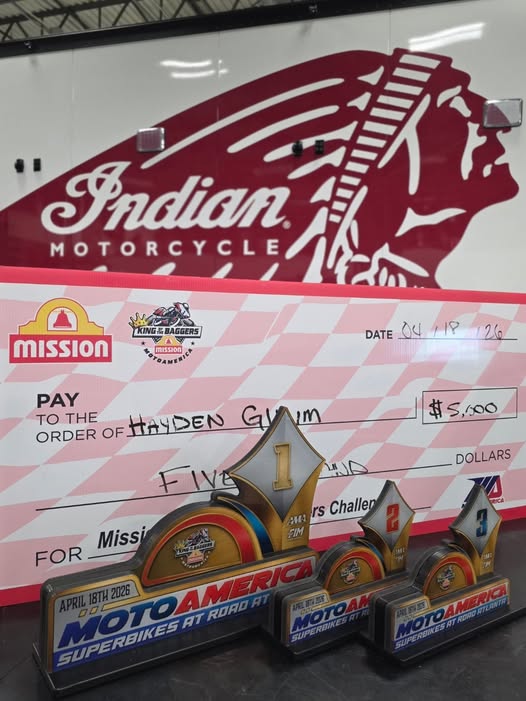
This has been a huge success. And his investment in the King of the Baggers Championship is not simply about sport — it is a commercial strategy with a direct and measurable connection to the showroom floor.
The Vance & Hines story is remarkable. Kennedy called Terry Vance in late September, in the middle of the Carolwood due diligence process, before the deal had even closed. He told Terry he wanted to go racing. He wanted to be at Daytona. He wanted to put a bike on the podium.
“Terry said, ‘Man, Mike, you’re asking a lot.’ I said, ‘I know, but I know who I’m asking.'”
From that late September phone call to the Daytona race weekend in early March was less than five months. The Vance & Hines team worked until 3am on multiple nights to get the bike ready. Kennedy admitted he was nervous the night before the first race — not about the result, but about the faith those people had placed in him and the brand.
The Challenger ran 186 mph on the Daytona straight — fourteen miles per hour faster than the year before. At the time of recording, four races into the 2026 season, Indian remained unbeaten. And the commercial connection is real.
“That 186 mph bike is the same chassis you can buy as a customer. The same engine architecture. The bodywork is the same dimension. When you look at our Challenger product line over the last 90 days and how it is outperforming the rest of our product line, there’s a big piece of that tied to racing. Our dealers are talking about it. Customers are telling us about it.”
The Aftermarket — A Fundamental Shift
For years Indian owners have pointed to the same frustration — the gap between Harley-Davidson’s vast aftermarket ecosystem and what has been available for their bikes. Kennedy not only acknowledged it, he committed to changing it in the most direct terms the brand has ever used publicly.
“I don’t want to stand in the way of what our riders want.”
His approach is partnership, not competition. If a rider wants a Reinhardt exhaust on their Challenger, or Krauss bars on their bagger, Kennedy’s job is to help make that happen — not to compete with those companies and lock them out of the market.
“I’m embracing the aftermarket. It’s real. It’s significant. My job is to make sure riders can get what they want. And it’s pretty simple.”
ARO will carry Indian’s own performance identity forward. But the broader aftermarket — the independent manufacturers who have been building for Indian platforms for years — will be treated as partners. This is a meaningful shift from the Polaris era and one that Indian owners have been waiting for.
The Dealers — The Most Important Partners in the Business
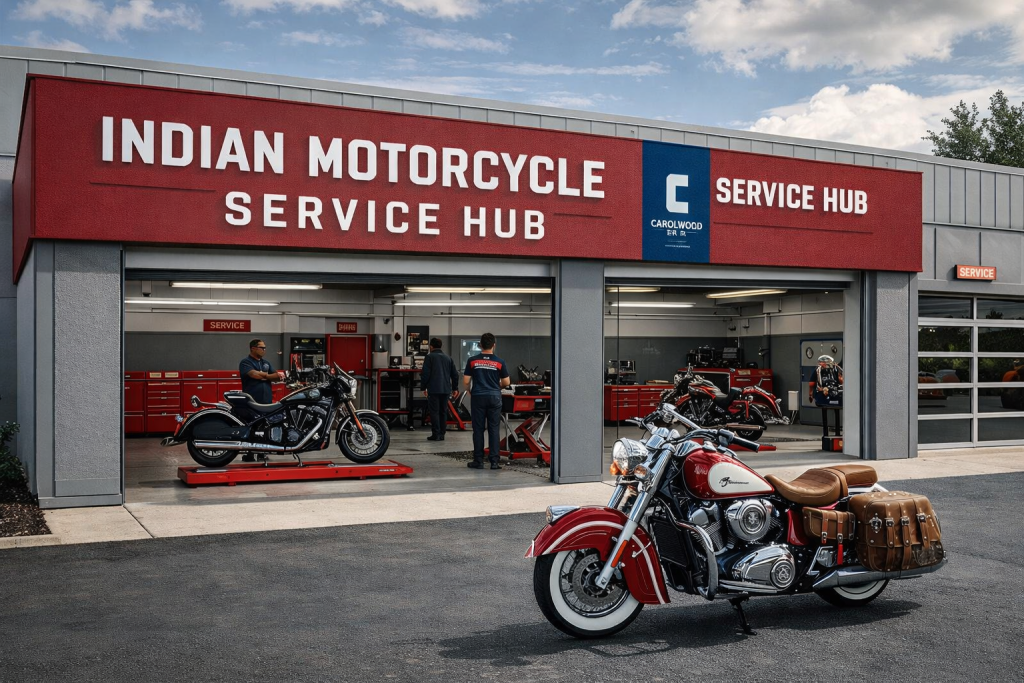
IMRGlobal will be publishing a dedicated feature on the Indian Motorcycle dealer network — including the coverage gaps, the service hub model, and what Kennedy said about expansion plans. IMRGlobal will also be attending IRF at Lipno in June, where we hope to speak directly with Indian Motorcycle representatives about EMEA, the dealer network, and the future for riders outside North America. Watch this space.
If there is one thread running through every answer Kennedy gave in this interview, it is this. Dealers are the most important partners Indian Motorcycle has. Full stop.
He said he was exited from Harley partly because he was viewed as too pro-dealer at a time when the culture there was moving in a different direction. He described his father owning a small business and the deep appreciation that instilled in him for what dealership owners actually face every day. He described the dealer show in Los Angeles — which he refused to do any press before, insisting dealers heard Indian’s new direction directly from the company first — as the most energised room he had experienced in 35 years in the industry.
“A day doesn’t go by when I don’t talk to one of our dealers, either through a text message or an email or face to face or a phone call. And I love that because every time I talk with them I’m learning.”
“If problems are at corporate, solutions are in the field.”
He also confirmed that the dealer network will expand — but strategically, not simply to put pins on a map. “We want to make sure that as we expand our dealer network, we do it the right way. An engaged dealer with a committed team outperforms their peers — not by a little, but by a significant amount.”
For our global community — particularly our EMEA riders who have been asking questions about dealer coverage, service access, and what the Carolwood era means for them — this conversation matters. IMRGlobal has been raising these questions directly with Indian Motorcycle since October 2024. Our feature on the dealer network and service hub model will bring the full picture together.
On Harley-Davidson
Kennedy was measured but clear. He described a long period when Harley was the greatest motorcycle company on the planet. What has followed in the last five to eight years he described as troubling — a company that has become disconnected from its core rider, with a previous CEO whose background was in the shoe business and who he said “despised the core rider.”
He described being shocked by the current Harley leadership appointment — not as a personal criticism of the individual but as evidence of a board that is disconnected from the business and the community it serves.
And then came the line that has already spread across the riding community.
“They make better T-shirts than motorcycles.”
He said it with a smile. He meant every word.
His Final Word to Any Rider on the Fence
Ryan closed with the simplest possible question. What would Kennedy say to a rider who has been considering Indian but has not yet committed?
“Take it for a test ride. And if you don’t buy it — call me. Because I don’t believe it.”
He described crossing eastern Texas and Louisiana on a Roadmaster, struck by how extraordinary the product actually is. The powertrain, the engineering, the technology, the comfort. He tells his Harley-riding friends that if they do not want a new bike in the garage, they should not go and take an Indian for a test ride.
“Hopefully riders are seeing the culture we’re building. A rider-focused mentality. We’re having a lot of fun — and we’re only getting started.”
Watch the Full Interview
The full Law Abiding Biker interview with Mike Kennedy — episode LAB-430 — is available now at lawabidingbiker.com and on all major podcast platforms. We strongly recommend watching it in full.
Coming from IMRGlobal
Based on this interview and our ongoing coverage of the Carolwood era, the following features are in development:
— The Indian Motorcycle Trike — what Kennedy revealed and what riders should expect
— The Dealer Network and Service Hubs — the coverage gaps, Kennedy’s dealer strategy, and what IMRGlobal is advocating for on behalf of the global community
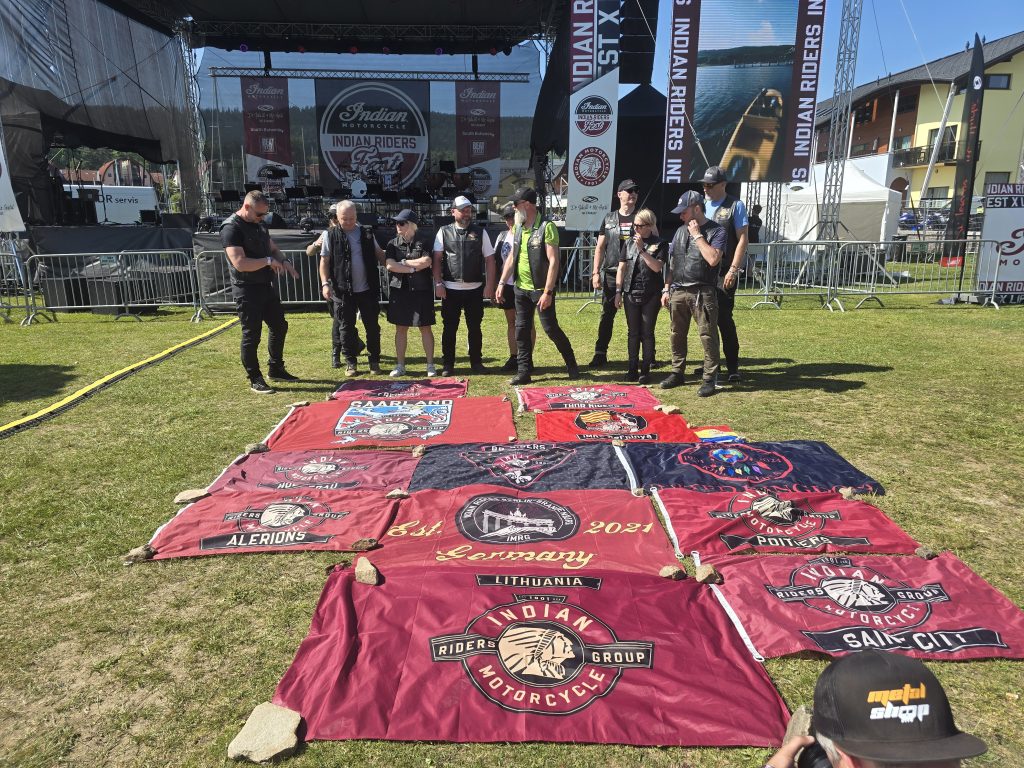
— IRF Lipno 2026 — IMRGlobal will be at Indian Riders Fest in June. We will be seeking direct conversations with Indian Motorcycle about EMEA, the network, and what the future holds for riders outside North America
IMRGlobal™ — Indian Motocycle Riders Global™ is an independent, rider-led global community platform. We are not affiliated with Indian Motorcycle, Carolwood LP, or any dealership.
8 Responses
Very interesting this interview. Keep the discussion open between the company and the riders themself.
Mike is certainly answering the right questions
Good article , I’m enjoying all the positive news about Indian motorcycles . I had my doubts when you started this group but I was wrong .
We try to promote what is going on in a positive way for the brand, after all we are all owners.
I have a 2017 Chieftain I bought used in 2021. I always buy and sell my bikes on average every 3 years.
I love this bike so much I can’t even consider selling it. When I do it will be another Chieftain.
After 40 years of riding I have found my forever model and brand, Indian Motorcycle Company.
Cynthia, that’s exactly what Indian Motorcycle is all about — thank you for sharing that. Forty years of riding and you’ve found the one you can’t let go of. That says everything about the Chieftain and the brand. The fact that riders like you exist is precisely why IMRGlobal exists too — to connect the people who feel exactly that way, all around the world. Here’s to many more miles on that Chieftain!
Great article He’s going to do great things for the Indian brand already is doing great things I’m heading out to the races this weekend at road America King of the baggers so excited to be able to do this with my youngest son and get him into writing and hopefully a chance to shake Mike Kennedy’s hand
Justin, that sounds like an incredible weekend — Road America for King of the Baggers with your son is the kind of memory that sticks with a kid forever. Getting the next generation into riding is what it’s all about. If you do get to shake Mike’s hand, tell him IMRGlobal says hello! Have a brilliant time and enjoy every minute of it.