The history of
INDIAN MOTORCYCLES
HENDEE
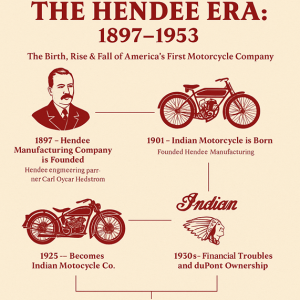
1897 – The Beginning of the Hendee Legacy
- George M. Hendee establishes the Hendee Manufacturing Company to build high-quality bicycles.
- Brands include Silver King, Silver Queen, and later the American Indian bicycle.
- This is the true starting point of the Indian Motorcycle story.
1900 – Hendee Meets Hedström
- Hendee sees Oscar Hedström’s motorised pacer bicycle at a racing event in Madison Square Garden.
- Impressed, he hires Hedström to build a motorised bicycle for his company.
The story of Indian Motorcycles is one of innovation, passion, and vision. George M. Hendee and Oscar Hedstrom’s journey from bicycles to motorcycles exemplifies the spirit of American ingenuity.
Hendee’s background in bicycles laid the groundwork for what would become one of the most iconic motorcycle brands in the world. His deep understanding of the mechanics of two-wheelers, combined with his entrepreneurial spirit, allowed him to see an opportunity in the emerging motorcycle market. He brought his expertise to the Hendee Manufacturing Company, which he co-founded with Hedstrom in 1901.
Hedstrom, who was a brilliant engineer, designed the first Indian motorcycle, which became a hit almost immediately. The company quickly grew, thanks to their commitment to quality and performance, helping make Indian Motorcycles a household name. The Indian motorcycle was celebrated for its innovation, style, and power, and became a symbol of American craftsmanship.
Indian Motorcycles was founded in 1901 by George M.Hendee and Oscar Hedstrom.
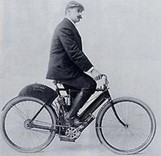
George Mallory Hendee was born on July 4, 1866, in Sturbridge, Massachusetts. Long before motorcycles, he made his name in the booming world of bicycles. Hendee became a successful bicycle racer and later a manufacturer, producing high-quality bicycles under the Silver King, Silver Queen, and American Indian brands. This early business experience gave him the mechanical insight and commercial leadership that would later define Indian Motorcycles.
Role at Indian (1901–1916)
- Co-founder of the Hendee Manufacturing Company in 1901, alongside engineer Oscar Hedström
- Responsible for business leadership, branding, sales strategy, and nationwide dealer development
- Chose the name “Indian” to convey strength, speed, and American identity
- Oversaw Indian’s rapid growth into the world’s largest motorcycle manufacturer by the early 1910s
- Guided the company through its golden era of racing success, innovation, and expansion
When He Left
Hendee retired in 1916, three years after Hedström’s departure.
He did not return to Indian during its later decades of ownership changes or decline.
After Indian
After retiring, Hendee lived quietly in Suffield, Connecticut. He focused on farming, philanthropy, and local community activities, remaining respected but no longer involved in motorcycling.
Date of Death
 September 7, 1943
at age 77.
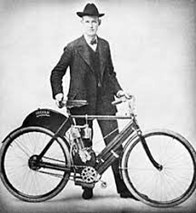
Oscar Hedström was a Swedish-American engineer who joined George M. Hendee in 1900, after Hendee saw one of Hedström’s custom-built motorised pacer bicycles and recognised his engineering talent. Hendee hired him to design a reliable motor-assisted bicycle for the new Hendee Manufacturing Company.
Role at Indian (1901–1913)
- Co-founder of the Indian Motorcycle brand
- Chief engineer and designer of Indian’s first engines and frames
- Responsible for the 1901 prototype and all early Indian engineering innovations
- Helped build Indian into the world’s largest motorcycle manufacturer by the early 1910s
When He Left
Hedström resigned in 1913, due to disagreements with new management and frustration over cost-cutting decisions that affected quality. He never returned to the company.
After Indian
After leaving Indian, he lived a quiet life in Portland, Connecticut, occasionally consulting on mechanical projects but largely retired from the motorcycle industry.
Date of Death
August 29, 1960
at age 89.
Alongside George Hendee, co-founded Indian Motocycle Manufacturing Company.
Hendee Manufacturing Company initially produced bicycles. However, when they began producing motorcycles, the company initially adopted the name “Hendee Manufacturing” for their new motorcycle division. The company later became known as Indian Motocycle after they introduced their first motorcycle in 1901.
The name “Indian” was chosen for several reasons, including:
- Symbolism of Strength and Power: The name “Indian” was associated with the Native American imagery of strength, power, and endurance. This aligned well with the company’s ambition to create a powerful, reliable, and competitive motorcycle.
- Marketing Appeal: The name had a strong, exotic appeal, which was seen as an attractive marketing tool. It stood out among competitors and gave the brand an air of prestige and ruggedness.
- Founder Influence: George Hendee himself is often credited with the inspiration for the name. It was a nod to the company’s connection to American history, as the name “Indian” evoked the spirit of the American frontier, making it appealing to customers at the time.
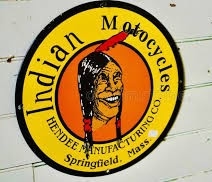
The company officially became “Indian Motocycle” in 1923, solidifying the brand name that would become iconic in the motorcycle world.
The spelling of “Indian Motocycles” without the “r” in the word “motorcycles” is actually a historical quirk tied to branding. In the early 1900s, when the Indian Motocycle Company was founded, the word “motorcycle” was often spelled in a variety of ways, including “motocycle” or “motorcycle.”
Also it paid homage to its beginnings as a bicycle manufacturer who fitted an engine to produce a moto-cycle.
There is also a story that at that time a manufacturer in Spain called ‘Motosacoche’ who was also producing motorcycles and left the ‘r’ out as well which was seen as a unique promotional edge but may have just been a translation error.
At the time, the spelling of words wasn’t as standardized as it is today, and companies would sometimes choose unique spellings to differentiate their brands or simply because it was a common variation in the industry. The Indian Motorcycle Company, under the leadership of founder George Hendee, likely adopted the “Indian Motocycle” spelling as part of their unique branding strategy. It helped give the brand a distinctive identity that set it apart from other motorcycle manufacturers.
Around 1929 the spelling of “motorcycle” became standardized with the “r” as the common form, but Indian continued to use the original form for a while longer.
Early Beginnings:
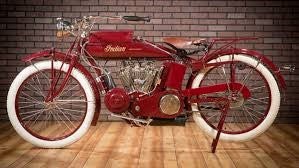
Indian’s first motorcycle, produced in 1901, was a single-cylinder, belt-driven machine with a 1.75 horsepower engine. It quickly gained attention due to its innovative design and reliability.
Expansion and Popularity:
By 1903, Indian had already become one of the first motorcycle manufacturers in America, and the brand quickly grew in popularity. By 1904, they were producing thousands of motorcycles each year.
In 1907, Indian introduced its V-twin engine, which became one of the most important innovations in the motorcycle industry at the time.
Indian’s reputation for performance grew during the early 1900s, with the company winning numerous races and establishing itself as a leader in American motorcycle manufacturing.
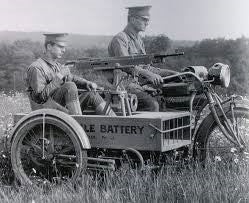
During World War I, Indian, like many other manufacturers, switched to military production. They built motorcycles for the military, which were used for various purposes, including reconnaissance and messenger duties.
After the war, Indian enjoyed an era of growth in the 1920s. The company made significant advancements in motorcycle design, including introducing electric start, hand-operated brakes, and improved springing and suspension systems.
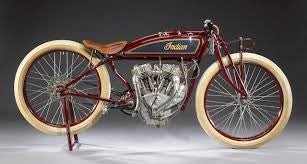
After Hedström Resigned (1913) and Hendee Retired (1916)
Once the two founders were gone, Indian entered a long period of inconsistent leadership, shifting priorities, and strategic missteps. Although the company still produced excellent motorcycles, it no longer had the unified engineering vision that Hedström provided or the business stability that Hendee created.
Late 1910s–1920s: Strong Products, Weak Direction
Indian continued to innovate, releasing:
- The Powerplus (1916)
- The original Scout (1920)
- The Chief (1922)
However, despite strong engineering, the company was becoming increasingly unstable behind the scenes.
Late 1920s – Growing Competition & Mismanagement
By the late 1920s:
- Harley-Davidson was rising rapidly
- Cheaper European imports were entering the U.S. market
- Indian’s leadership problems created inefficiency and high production costs
Indian began to lose market share and struggled to find a consistent direction.
1930 – Bankruptcy & the duPont Acquisition
The Great Depression devastated the motorcycle industry. With plummeting sales and rising costs, Indian filed for bankruptcy in 1930.
This crisis triggered a turning point:
The duPont family stepped in and saved Indian.

Éleuthère Paul du Pont (“E. Paul”), a lifelong engineer, tinkerer, and motorcycle enthusiast, had already been indirectly connected to Indian through his brother Francis, who had invested $300,000 in 1923. Faced with the near-collapse of that investment, the family acted:
DuPont Motors, a company known for its beautifully crafted luxury cars (1919–1931),
was merged with Indian Motorcycle.
E. Paul du Pont became the president of Indian.
DuPont Motors had produced only ~600 luxury automobiles in its lifetime — beautifully built, but too costly to survive the 1929 crash. E. Paul wisely shut down automobile production in 1931 to focus entirely on Indian.Paul du Pont – The Man Who Rebuilt Indian
Paul was not just an executive — he was a hands-on motorcycle enthusiast:
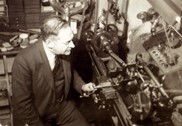
- Built his own motorized bicycles as a teenager
- Owned an early 1908 Indian Camelback
- Worked with lathes and machinery personally
- Believed motorcycles were becoming leisure machines, not just tools
His Leadership Philosophy
- Paul made bold changes at Indian:
- Motorcycles for Enjoyment, not Utility
He recognised that the future rider wanted:
- Style
- Comfort
- Speed
- Personality
- Racing as Advertising
DuPont focused heavily on AMA Class C racing, helping revive Indian’s competition presence.
- Styling & Design Innovation
He hired legendary stylist Briggs Weaver, who created:
- The sweeping, deeply skirted fenders
- The iconic Art Deco curves
- The ‘Indian head’ insignia
- The design language that STILL defines Indian today
- Bold Colours from DuPont Paint
DuPont Chemical invented fast-drying nitrocellulose lacquer in the early 1920s.
Under duPont ownership, Indian became available in 24 bright colours, a revolution compared to the “any colour as long as it’s black” reality of earlier manufacturing.
This gave Indian unmatched visual appeal in the 1930s.
Production Revival and Racing Success
Under duPont ownership:
- Quality control improved dramatically
- The Scout, Chief, and Four reached peak refinement
- Indian’s racing team achieved real success again
- Steven du Pont (E. Paul’s son) helped engineer the Big Base Racing Scout
- Sales climbed, and profits finally returned
By 1938, Indian was profitable again — hugely so.
Indian’s 1938–1940 models remain some of the most recognizable motorcycles ever built.
Indian in WWII (1940–1945)
- Paul du Pont oversaw Indian’s wartime production.
Though Harley-Davidson’s WLA was selected as the U.S. primary military bike, Indian produced:
- 741B – 500cc military Scout
- 640B – Chief-based military motorcycle
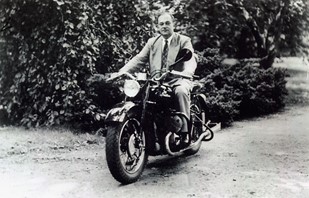
- 841 – Experimental shaft-drive V-twin inspired by the BMW R75 (only ~1000 built)
The 841 was E. Paul’s personal favourite; he put thousands of miles on his own machine.
The End of the duPont Era
As WWII ended:
- Indian was profitable
- Demand was high
- The styling and engineering were admired worldwide
But E. Paul du Pont’s health was failing, and the profitable factory became attractive to investors.
The duPont family stepped away — though their passion for motorcycles continued.
They kept Indian alive in the 1930s — without them, Indian would not have survived to see WWII or inspire later generations.
In 1945, Indian was sold to an investor group led by Ralph B. Rogers.
Transition to the Decline Under Rogers (post-1945)
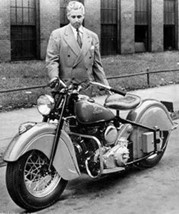
In 1945, duPont sold Indian to Ralph B. Rogers and Torque Engineering.
Rogers wanted to modernize Indian, but his strategy was flawed.
After duPont ownership ended, Ralph Rogers made catastrophic decisions:
- Focused on lightweight vertical twins
- Reduced investment in the big V-twin Chief while betting heavily on the vertical twin program
- Rushed untested designs to market
- Lost dealer and rider confidence
This led directly to Indian’s long decline, culminating in the company’s closure in 1953.
He:
- Cut back production of the big Chief
- Bet everything on the new vertical twin line
- Invested heavily in untested designs
- Attempted a global expansion Indian could not support
These decisions drained Indian’s finances during a critical time.
1948–1949 – The Desperate Vincent–Indian “Vindian” Project
Indian attempted a bold partnership with Vincent HRD to create a high-performance hybrid motorcycle for the U.S. market.
Vincent HRD in the UK, under Phil Vincent and chief engineer Phil Irving, had developed the world’s fastest production motorcycles (the Series B Rapide in 1946, followed by the 1948 Black Shadow). However, Vincent was a small-volume specialist maker, struggling financially and keen to expand into the lucrative American market.
1948–1949 – The Idea
By 1948, Indian’s big Chief twins were outdated, heavy, low-revving, and inefficient compared to modern OHV designs. The 74ci (1,200cc) flathead engine was heavy and underpowered compared to British and European OHV designs. Ralph Rogers wanted to modernize Indian’s lineup with lightweight OHV vertical twins (the 500cc Scout, 440cc Warrior, etc.), but American riders and dealers still demanded big displacement and speed.
That’s where the collaboration idea was born:
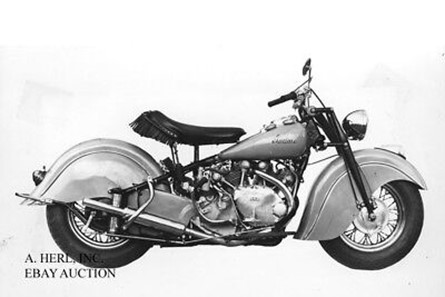
- Fit Vincent’s 998cc OHV V-twin engine and gearbox into the proven Indian Chief chassis.
- Retain the iconic Indian styling (skirted fenders, Indian tank, comfortable American ergonomics).
- Sell it in the U.S. as an “Indian” with world-leading performance — potentially leapfrogging Harley-Davidson.
1949 – The Prototypes
In early 1949, Vincent engineers built two prototypes at their factory in Stevenage, England:
- Vindian Prototype #1 – A Rapide engine installed in a Chief chassis, keeping most of the Indian cycle parts intact.
- Vindian Prototype #2 – A more refined machine, with Vincent transmission, electrics, and Indian sheet metal.
Both were shipped to the U.S. for testing and evaluation by Indian management.
Performance was strong — far beyond the sidevalve Chief — but there were concerns:
- The bikes were complex and costly to build.
- Import duties and transatlantic logistics made production expensive.
- Indian’s finances were already weak, and Vincent couldn’t bankroll mass production.
Collapse of the Project
By late 1949, the project was shelved. Indian doubled down on its own lightweight vertical twin program (the Scout/Warrior line), but these proved unreliable and failed in the marketplace. By 1953, Indian ceased motorcycle production entirely.
Vincent fared no better — production ended in December 1955, after just 27 years of operation.
Survivors
- Of the two Vindians built, at least one is known to survive. It has appeared in private collections and occasionally in museums. The fate of the second is uncertain — some accounts suggest it was dismantled.
Two prototypes were built, but:
- Cost
- Logistics
- Indian’s weak financial state
- Vincent’s limited production capacity
…meant the project never reached production.
This was one of Indian’s last serious attempts at regaining its former glory.
1950–1952 – Collapse Accelerates
Indian’s new vertical twins failed catastrophically in the marketplace:
- Fragile engines
- Constant mechanical failures
- Warranty claims
- Manufacturing inconsistencies
- Poor dealership support
Meanwhile:
- Harley-Davidson dominated America
- Triumph, BSA, and Norton flooded the U.S. with fast, affordable imports
- Indian’s Chief was outdated, built in low numbers, and expensive
Indian no longer had a competitive product.
1953 – Indian Ceases Production
After years of losses, shrinking sales, and failed new models, Indian Motorcycles:
- Stopped all production in 1953
- Went out of business as a manufacturer
- Left behind only its name and a legendary legacy
The Springfield era — the true, original Indian Motorcycle company — ended permanently.
Legacy
Although the Indian name resurfaced many times over the next 50 years under various owners, the original company created by Hendee and Hedström effectively ended in 1953, marking the closure of one of the most iconic motorcycle manufacturers in history.
BROCKHOUSE 1955 - 1960
The first resurrection of Indian — and the moment when everything changed.
When the original Indian Motocycle Manufacturing Company closed its doors in 1953, the factory in Springfield fell silent never to be used today only parts of the foundations left today with no signs it ever was there — but the name Indian did not die.
Instead, it entered a strange and complicated chapter under the control of a British company called Brockhouse Engineering.
This period reshaped the Indian brand forever, marking the first time the Indian name was separated from the motorcycles that made it legendary.
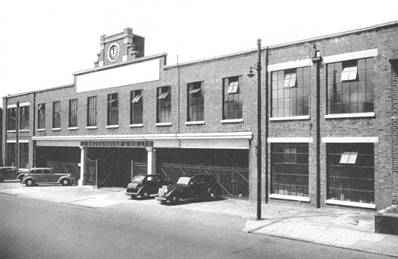
Who Were Brockhouse?
Brockhouse Engineering (Southport, England) was a large post-war industrial supplier known for producing:
- Motorcycles
- Power units
- Sidecars
- Industrial equipment
They were not a premium motorcycle builder.
Instead, they specialized in mass production and contract manufacturing, often supplying components to companies that needed wartime-style efficiency.
Brockhouse was the parent company behind Clyno, James, and Dot motorcycles — modest commuter machines, not American-style V-twins.
Why Brockhouse Bought Indian
After Indian collapsed financially in 1953, Brockhouse acquired:
- The trademark rights
- The dealer network rights
- The ability to market motorcycles under the Indian name
But they did not buy:
- The Springfield factory
- The Chief/Scout tooling
- Any meaningful manufacturing capability in the U.S.
Their goal was simple:
Use the Indian brand to sell motorcycles they did not build.
This was the birth of “badge engineering” in Indian’s history.
Rebadging Royal Enfields (1955–1960)
The most significant move Brockhouse made was to partner with Royal Enfield of Redditch, England.
Royal Enfield built:
- Bullets (350cc / 500cc singles)
- Meteor and Super Meteor twins (500–700cc)
- Constellation 700cc twins
These bikes were solid British machines — but they were not Indians.

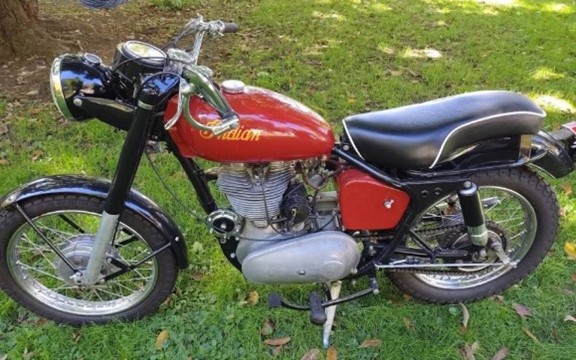
Brockhouse imported Royal Enfields to the United States, rebadged them, repainted them, and sold them as “Indian” models:
The Royal Enfields that Became “Indians”
- Indian Brave → Royal Enfield 250 single
- Indian Prince → Royal Enfield 350 Bullet
- Indian Westerner → Enfield 500 Twin
- Indian Fire Arrow → Enfield 250
- Indian Trailblazer → Enfield Super Meteor 692cc
- Indian Apache → Enfield Constellation 700cc
- Indian Chief → Enfield 700cc twin with big fenders to mimic the old Chief style
The “Chief” of this era had no relation to the legendary 1922–1953 Chief except the name and some cosmetic fender work.
How Riders Reacted
American riders who remembered Springfield’s powerful V-twins were confused — and many were disappointed.
The Brockhouse “Indians”:
- Looked British
- Felt British
- Had British ergonomics and engineering
- Were smaller, lighter, and less powerful
- Lacked the iconic Indian personality
Dealers struggled.
Customers were irritated.
And the Indian identity was watered down.
This era planted the seeds of the brand’s long identity crisis.
Attempts to Keep the Brand Alive
Brockhouse did invest in:
- Keeping the U.S. dealer network operating
- Producing accessories
- Offering sidecars and small-displacement commuter bikes
But they were not trying to rebuild Indian — only to monetize it.
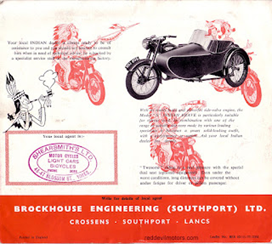
Several U.S. distributors complained that Brockhouse supplied:
- Inconsistent parts
- Unreliable shipments
- Poor marketing support
Enfield’s British bikes were well made, but the rebadging strategy failed to resonate with Americans.
The End of the Brockhouse Era (1960)
By 1960:
- Sales had collapsed
- Dealers revolted
- The rebadged Enfields were not selling
- Brockhouse lost interest in the brand
Brockhouse relinquished control of the Indian name, ending their seven-year run.
No Indian motorcycles — U.S.-built or otherwise — would be produced again in any recognizable form for the next several years.
This ended the first failed resurrection.
What this part of the history of Indian did was keep the name alive and Indian became a brand not a manufacturer. The name might have been lost altogether without this era.
Associated Motor Cycles 1960–1963 — The Empire That Didn't Need It
Associated Motor Cycles did not go looking for Indian. They arrived at it sideways, as a consequence of a much larger transaction — and that, in many ways, explains everything about how their tenure with the name unfolded.
By 1959, AMC was one of the most powerful forces in the British motorcycle industry. Founded in 1938 as the parent company of Matchless and AJS, the Collier family business had spent two decades assembling an empire. AJS had been absorbed in 1931. Sunbeam followed in 1937. Francis-Barnett came in 1947, James in 1951, and most significantly of all, Norton in 1952. From their factory on Plumstead Road in Woolwich, south-east London, AMC oversaw a portfolio of some of the most respected names in British motorcycling. Their singles and twins were raced at the highest levels, their Norton Featherbed-framed machines were coveted on both sides of the Atlantic, and their AJS 7R and Matchless G50 racers were fixtures on circuits across Europe. AMC was not a company in need of another brand.
In 1959 they acquired the Brockhouse Engineering Group. It was a business decision driven by Brockhouse’s engineering operations and industrial interests, not by any particular desire to own the Indian name. But the Indian Sales Corporation came with the deal — and with it, the trademark that had been kept commercially active since the Springfield factory closed six years earlier. AMC now held Indian almost by accident.
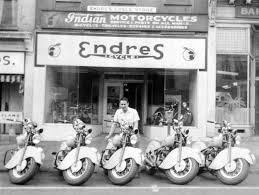
The problem was immediately apparent. AMC’s own portfolio included Matchless, AJS, Norton, Francis-Barnett and James. Their American presence was growing — Norton twins in particular were finding a receptive market among riders who wanted something more exotic than a domestic product. The Indian dealer network that Brockhouse had maintained offered AMC a ready-made distribution channel in the United States, and for a brief period they used it — channelling Matchless and AJS motorcycles through Indian dealers to reach American customers. It was a pragmatic decision, but it contained a fundamental contradiction. Royal Enfield, whose machines had formed the backbone of the Brockhouse-era Indian range, was a direct competitor. AMC had no interest in continuing to sell a rival’s motorcycles under any name.
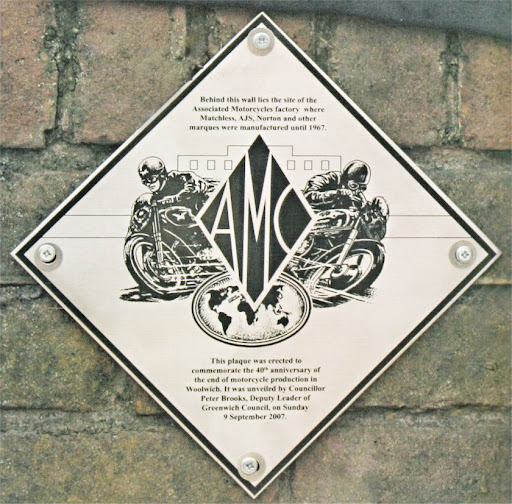
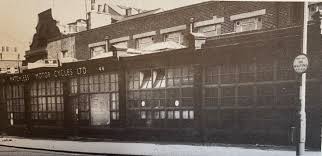
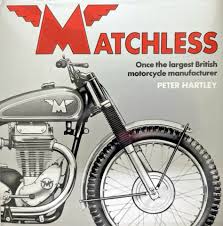
The result was swift and decisive. Almost immediately after taking control, AMC stripped back the Indian-badged Royal Enfield range, retaining only the 700cc Chief for a short period before phasing it out entirely. The Indian logo disappeared from the tanks of the machines being sold through the dealer network. Matchless and AJS motorcycles were offered instead, under their own names, through what remained of the old Indian distribution channels. The Indian name was present in the commercial infrastructure but absent from the product.
By 1961, AMC’s own finances were deteriorating sharply. The company had posted a profit of just over £200,000 in 1960 — modest compared to BSA’s £3.5 million for the same year — and swung to a loss of £350,000 in 1961. The closure of the Norton plant in Birmingham in 1962 and the forced merger of Norton and Matchless production lines signalled the beginning of a deeper structural crisis. AMC was fighting for its own survival. The Indian name, which had generated no meaningful revenue under their ownership, was an irrelevance. By 1962 to 1963, the US distributorship had been handed to the Berliner Motor Corporation of New Jersey, and all remaining references to Indian were quietly removed. The trademark passed into a brief period of limbo before Floyd Clymer moved to acquire it.
AMC’s connection to Indian lasted barely three years and left almost no trace on the machines that reached American riders during that period. In one sense, their tenure represents the lowest point in the name’s post-Springfield history — not because of what they did, but because of what they chose not to do. They held one of motorcycling’s most powerful names and made a deliberate commercial decision to set it aside. The Indian badge, for the first and only time in its history, was deemed surplus to requirements.
For Indian, the AMC years were a parenthesis — a pause between the Brockhouse era and the arrival of a man who actually cared about what the name meant.
Floyd Clymer 1963–1970 — The Enthusiast's Gamble
By 1962, the Indian name had passed through two British owners in less than a decade and had arrived, once again, at a dead end. Associated Motor Cycles, unable to make commercial sense of the brand and facing serious financial difficulties of its own, quietly withdrew from any meaningful promotion of the Indian marque. For a brief period the name sat in limbo — not formally abandoned, but effectively unclaimed. Then, in 1963, a man who had spent the better part of forty years trying to get his hands on it finally succeeded.
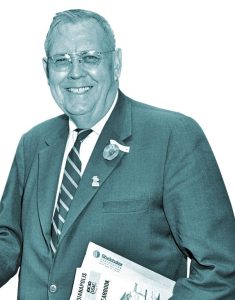
Floyd Clymer was not an outsider to Indian. He had been part of its world since the 1920s, when he ran the Indian, Excelsior and Henderson distributorship for Colorado and neighbouring states out of Denver, billing himself as the largest motorcycle dealer in the West. He had raced motorcycles since his teens, winning the first professional Pikes Peak Hillclimb on an Excelsior, earning a place on the Harley-Davidson factory team in 1916, and taking the National Sidecar Championship in 1920.
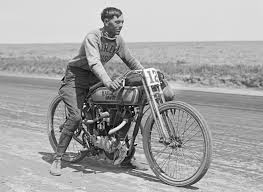
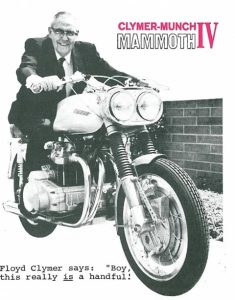
His personal history was a catalogue of ambition and resilience — as a young man he had even spent time in the federal penitentiary at Leavenworth after refusing to plea bargain a mail fraud conviction he maintained was unjust, and had come out the other side entirely undeterred. In the motorcycling world, his name carried real weight. He was, as Cycle World would later put it, the King of the Hucksters — and he meant it as a compliment.
By the time he turned to publishing, Clymer had already lived several careers. His repair manuals, standardised in format and illustrated with photographs, became essential reading for home mechanics across America. His historical books on early automobiles and motorcycles were among the first serious efforts to document the industry’s heritage. In 1951 he purchased Cycle magazine from Petersen Publishing, building it into one of the world’s leading motorcycle publications before selling it in 1966. He was also a race promoter, an event organiser, and — crucially — a man who had never lost his emotional attachment to the Indian name. When the Springfield factory closed in 1953, Clymer was among the small group of Indian loyalists who had offered financial assistance to try to keep the company going. When that failed, he began quietly working to acquire the trademark. It would take him a decade.
His opportunity came when AMC’s grip on the name finally loosened. Exactly how the transfer occurred is not entirely straightforward — some sources suggest Clymer began using the Indian name from as early as 1963 without having formally purchased it from the last confirmed holder of the trademark, with legal assignment following later. What is clear is that by the mid-1960s he had secured the Indian Sales Corporation and set about putting the name back on motorcycles.
He was a pragmatist. He understood that rebuilding a factory, developing a new engine, and re-establishing a dealer network from scratch was neither achievable nor commercially rational in the face of a motorcycle market being rapidly reshaped by the Japanese manufacturers. What he could do was keep the name alive, maintain a dealer presence, and work toward something more substantial in time. To do that, he looked not to America or Britain, but to Italy.
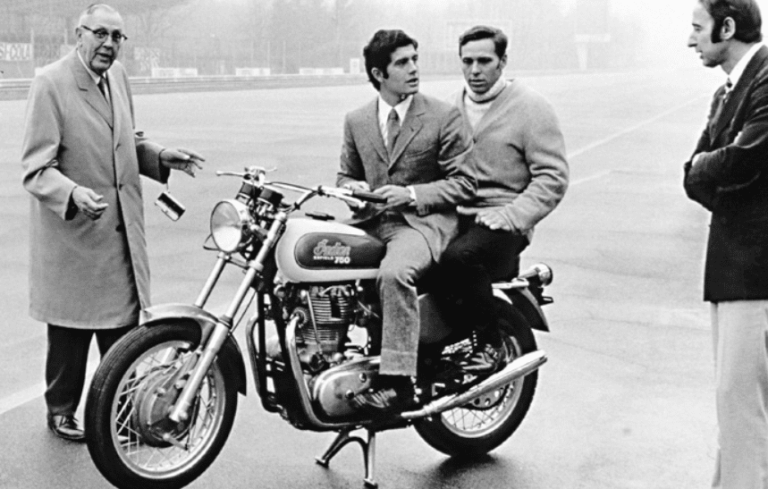
His partnership with Leopoldo Tartarini proved to be the most significant relationship of the Clymer era. Tartarini was the founder of Italjet, a small but exceptionally innovative manufacturer he had established in Bologna in 1960. A former racing driver with a deep understanding of chassis design and a gift for aesthetics, Tartarini was already building striking machines for the European market and had established relationships with component suppliers across Italy. He was, as one period account described him, a man who was tireless when it came to turning out new models. For Clymer, he was exactly the right partner.
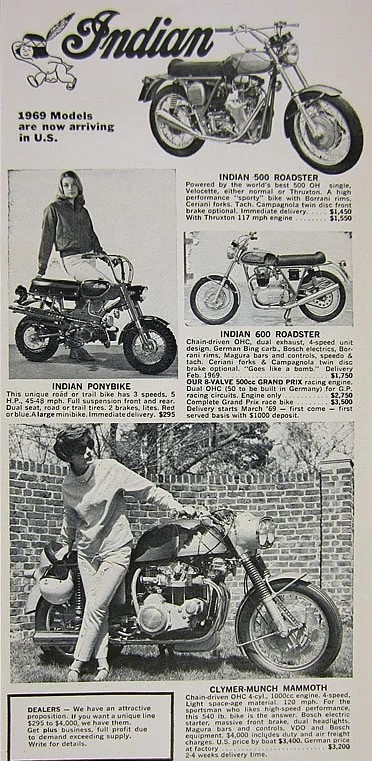
The collaboration began modestly. Clymer commissioned Tartarini to produce a 50cc Minarelli-engined minibike to be sold under the Indian name — a machine aimed at introducing a younger generation of American riders to the brand. The bike was called the Papoose, a name that echoed Brockhouse’s earlier use of the same model designation. It was a shrewd commercial move. The Papoose sold strongly, and Italjet ultimately built more than fifteen thousand of them for the American market. Clymer used the small machines tactically — distributing them as gifts to dealers he was signing up for the larger Indian models he was developing in parallel. A full range of small-displacement machines followed, including the Pony Bike, the Boy Racer, the Super Scrambler, and the Bambino, drawing on engines from Minarelli, Franco Morini, and Jawa. All were sold through the Floyd Clymer Motorcycle Division, operating from premises on North Virgil Avenue in Los Angeles.
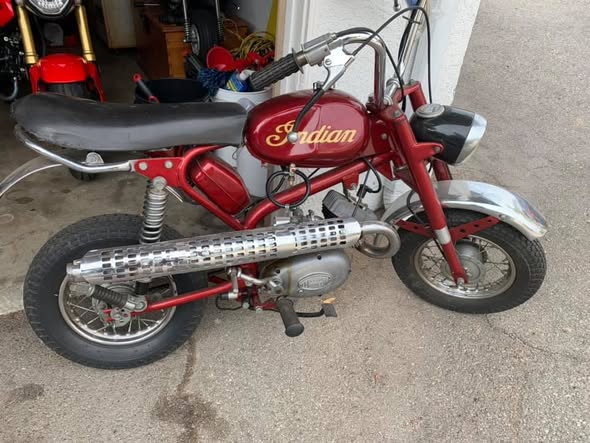
But Clymer’s ambitions reached further than minibikes. His intention, stated clearly and pursued seriously, was to work toward a reborn Scout and Chief — full-size American Indians built to modern standards. As an intermediate step, he worked with Tartarini to produce two full-size machines that could carry the Indian name with some credibility.
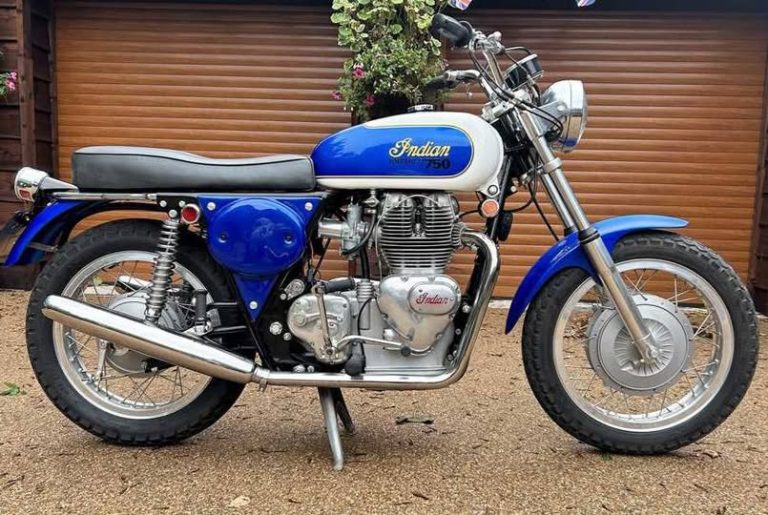
The first was based on the Italjet Griffon design, fitted with the Royal Enfield Interceptor 750cc parallel-twin engine. It was a handsome machine — an Italian chassis housing British power — and approximately fifty were built. Tartarini had originally negotiated to use Triumph Bonneville engines, but when Triumph discovered the powerplants were destined for a competitor’s motorcycle, the deal was blocked. Royal Enfield, itself struggling commercially, proved willing partners.
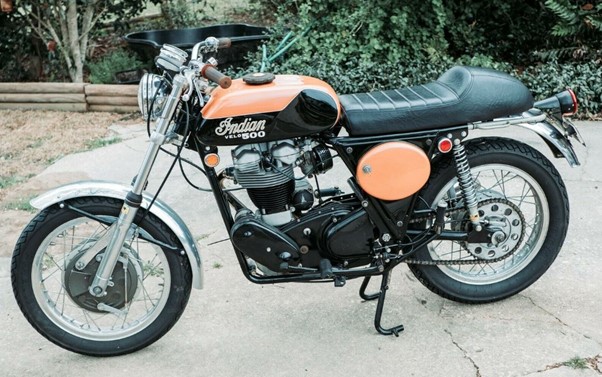
The second and more ambitious machine was the Indian Velo 500. Clymer and Tartarini sourced 500cc overhead-valve single-cylinder engines from Velocette, the Wolverhampton manufacturer whose Venom and Thruxton models were still regarded as among the finest handling motorcycles in production, even if the company’s finances were precarious. The engines were shipped to Bologna, where Tartarini mated them to a purpose-built tubular steel double-cradle frame that owed something aesthetically to the famous Norton Featherbed design but was substantially lighter — nearly 45 pounds less than a standard Velocette. The specification was serious: Marzocchi front and rear suspension, Borrani aluminium rims, and Grimeca brakes. The finished motorcycle weighed significantly less than the Velocette it drew its engine from and was, by period accounts, a better-handling machine than the original. Approximately 200 were built in total, with around 150 going to the United States and 50 remaining in Britain, sold through London dealer Geoff Dodkin.
In 1967, Clymer also briefly marketed the German-built Münch Mammoth — a vast, NSU car-engined machine that he called the Ferrari of motorcycles — under Indian branding, though this remained a peripheral venture rather than a core part of the Indian range.
None of this was Indian in any traditional sense. Clymer knew that better than anyone. What he was building was a bridge — a commercial presence that kept the name in showrooms and the brand in the public consciousness while he worked toward something more permanent. Whether that larger ambition could ever have been realised remains one of the more intriguing unanswered questions in the marque’s history, because on the morning of 22 January 1970, Floyd Clymer died of a heart attack in Los Angeles. He was 74 years old.
The timing could hardly have been worse for the Indian name. Almost in sympathy, both Royal Enfield and Velocette closed their doors within the following year, eliminating the two engine suppliers on which the full-size Indian range depended. Around 90 Royal Enfield Interceptor engines that had been earmarked for Indian production were left without a home. The Velo project, already in its final stages, came to an abrupt stop.
Clymer left behind his wife Merle and two children from an earlier marriage. He also left behind a body of publishing work that remains collectible to this day, and a motorcycle legacy that is genuinely complicated. The machines that bore the Indian name during his tenure were Italian and British in almost every component. They were not Springfields. But they were real motorcycles, designed and built with genuine care, and the Velo 500 in particular stands as one of the finer pieces of late-1960s motorcycle design — a machine that deserved a longer production run than fate allowed.
Merle Clymer sold the Indian trademark to her husband’s Los Angeles attorney, Alan Newman. The name passed on for the fourth time in less than twenty years, carrying with it the weight of everything Clymer had tried and the unfinished ambition of a man who had spent most of his adult life trying to bring Indian back.