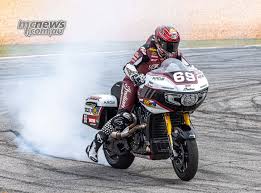
Indian Motorcycle, the King of the Baggers, and a rulebook that keeps changing when Indian starts winning
There is a pattern — or at least, something that looks very much like one — in American motorcycle racing that Indian owners are starting to recognise. It does not announce itself loudly. It arrives quietly, dressed in the language of competitive balance and sporting fairness. But when you have watched it play out more than once — in more than one discipline, across more than one decade — it starts to feel less like coincidence and more like a story you have already seen.
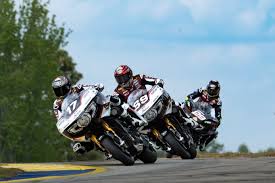
The latest chapter opened on 1 May 2026, when MotoAmerica issued Technical Bulletin 02-5000-26. Buried inside was a mid-season rule change to the Mission King of the Baggers Championship. Harley-Davidson’s Road Glide race bikes would be permitted to rev to 7,200 rpm. Previously the limit had been 7,000 rpm. Two hundred revolutions per minute. On paper it sounds like nothing. In the context of what has been happening on track in 2026, it means everything.
Before we get to that, it is worth understanding how we arrived here — and why, for anyone who has been paying attention to the history of Indian Motorcycle in American racing, this moment carries a weight that goes far beyond a single technical bulletin.
A Quick History Lesson
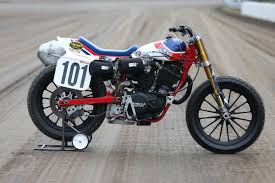
Indian Motorcycle has been winning races since 1901. But the modern era of the rivalry with Harley-Davidson in professional motorsport really reignited in 2017, when Indian returned to American Flat Track racing after a sixty-year absence. They did not return quietly. They arrived with a purpose-built race machine — the FTR750 — developed with MotoGP-grade engineering, featuring an engine designed by Swissauto, a Swiss motorsport firm owned by Polaris, with the chassis developed alongside S&S Cycle. Jared Mees, one of the greatest flat track riders of his generation, helped shape the bike from the saddle.
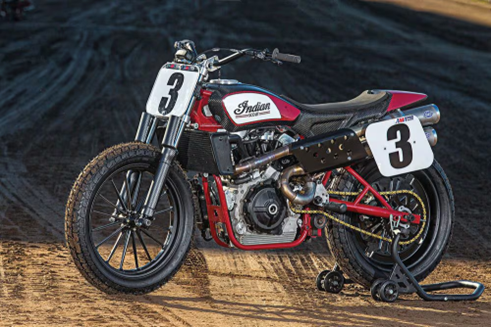
The result was one of the most dominant racing machines in American motorsport history. According to Indian Motorcycle’s own official figures, in eight seasons of competition the FTR750 won 101 races from 135 starts, stood on the podium in 96% of the races it entered, and won the Grand National Championship every single year from 2017 through 2024 — eight consecutive titles. Nothing came close to touching it.
Then, ahead of the 2025 season, American Flat Track changed the rules. The SuperTwins class would now require production-based engines only. The FTR750, a race-only machine never sold to the public, was no longer eligible to compete. Effectively, the most successful purpose-built race bike in the history of the sport was legislated out of existence. Almost immediately, Harley-Davidson’s XG750R — which had been largely absent from the sharp end of the field for years — was back in contention and winning races.
Meanwhile, Indian’s road-going FTR1200 — a street bike inspired by the FTR750’s DNA, which had been raced with considerable success in the Roland Sands Super Hooligan National Championship series — was discontinued in early 2025. The series itself evolved, and when it returned under revised sponsorship, the title partner was Harley-Davidson. Whether the FTR1200’s exit was driven by commercial pressures, emissions compliance costs, or the cumulative effect of progressive weight ballast rules that had made life increasingly difficult for the Indian entry, is open to debate. What is not open to debate is the result: two Indian machines, two disciplines, both gone from the picture.
Two disciplines. Two Indian machines. Both dominant within the rules that existed at the time. Both eventually sidelined by rule changes. The same film, playing twice.
There is more to say about the FTR750 and the extraordinary story of how Indian built it — including what that Swissauto engine partnership really meant, and the chapter that played out on the Bonneville Salt Flats. That story deserves its own feature, and it will get one. For now, it is the backdrop you need to understand what is happening in King of the Baggers in 2026.
What Is King of the Baggers?
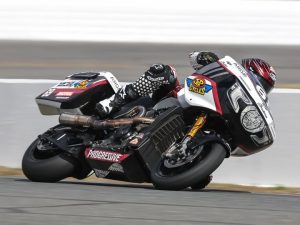
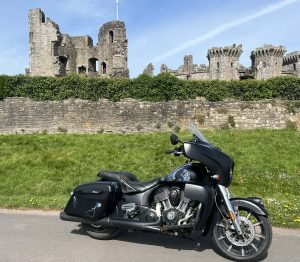
For those who came to Indian through the touring world rather than the racing paddock, a quick explanation. The MotoAmerica Mission King of the Baggers Championship is a road racing series that does exactly what it says — it races baggers. Full-dress touring motorcycles. Fairings, saddlebags, the works. Two manufacturers are eligible: Harley-Davidson, racing the Road Glide, and Indian Motorcycle, racing the Challenger. Nobody else. It is, by design, a civil war on two wheels.
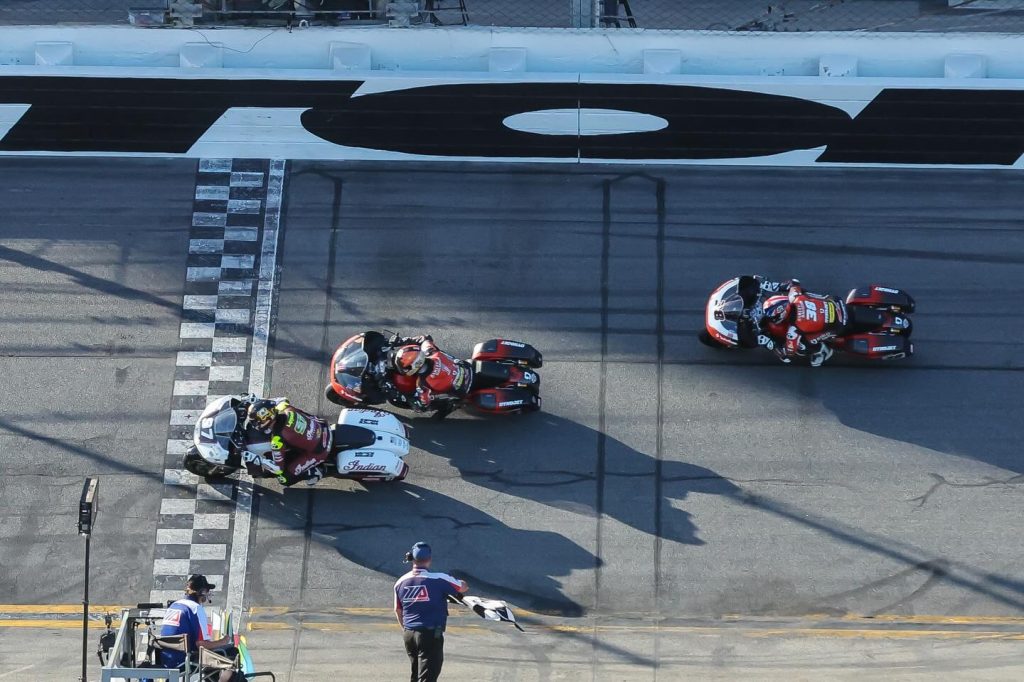
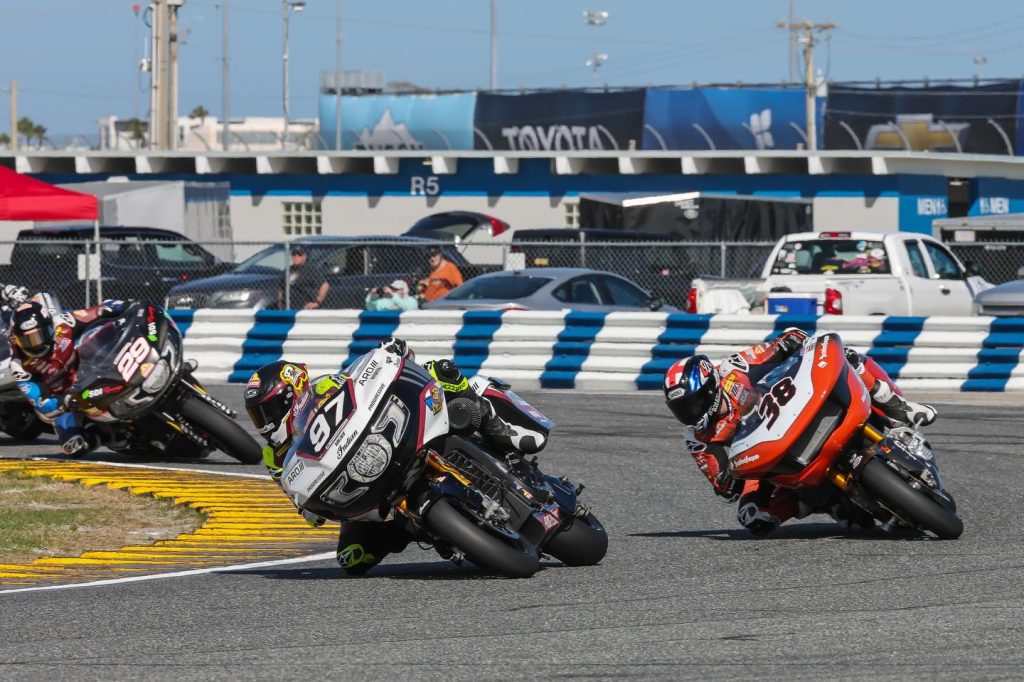
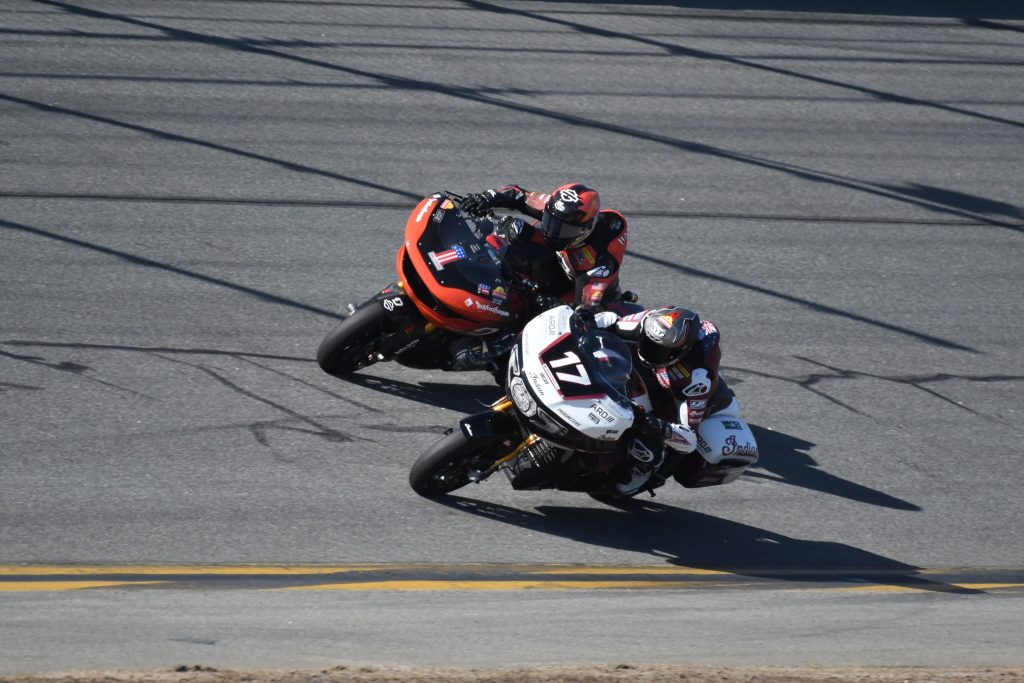
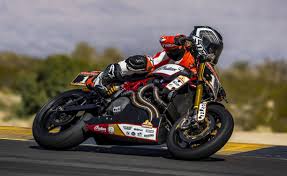
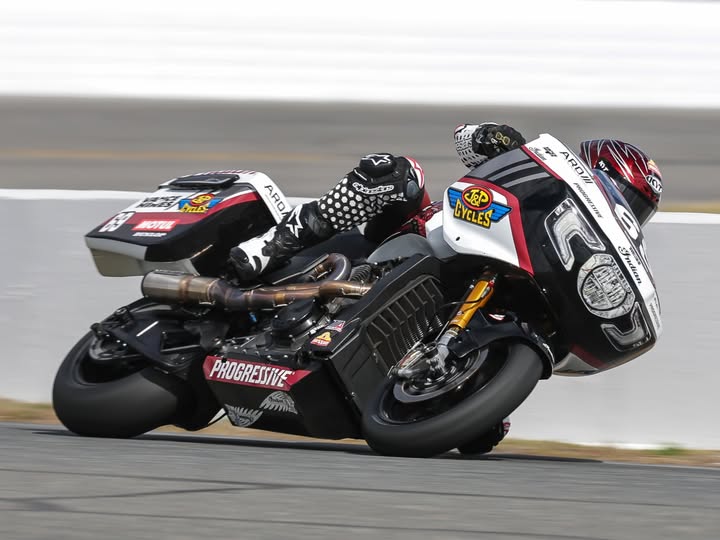
The bikes are far from stock. Carbon fibre bodywork, full race suspension, slick tyres, and engines producing well over 150 horsepower propel machines that weigh more than 620 pounds to speeds approaching 185 mph on circuit. Lean angles of up to 55 degrees. On a bagger. It is, genuinely, one of the most spectacular things in American motorsport — and it has been growing fast since its first season in 2021.
The championship has alternated between the two brands since it began. Harley won in 2021 with Kyle Wyman. Indian took it in 2022 with Tyler O’Hara. Harley won in 2023 with Hayden Gillim. Indian won in 2024 with Troy Herfoss. Harley won again in 2025 with Kyle Wyman. Five seasons, five championships — three to Harley, two to Indian. On paper, the series looks beautifully balanced. Under the surface, it is far more complicated than that.
The Engine Problem Nobody Talks About
Here is what most casual observers of King of the Baggers do not realise. The two bikes are not racing the same machine in different colours. They are fundamentally, architecturally different motorcycles — and managing that difference is what MotoAmerica’s technical team spends a significant portion of its time doing.
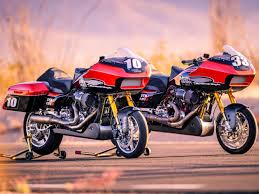
Harley-Davidson’s Road Glide race bike runs the Screamin’ Eagle Milwaukee-Eight 131 — an air-cooled pushrod V-twin of 131 cubic inches, roughly 2,147cc. It is a big, traditional American engine that generates enormous torque from low in the rev range. It is, in the best possible sense, a bruiser. At 80 mph on a public road, a stock version of this engine turns at around 3,000 rpm. It does not need to work hard, because it has so much cubic capacity doing the work for it.
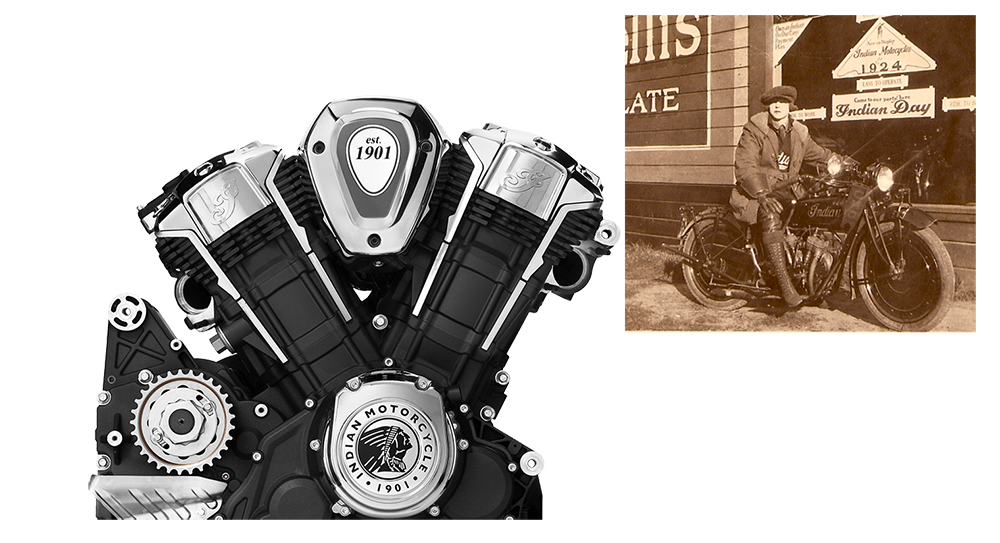
Indian’s Challenger race bike runs the PowerPlus 112 — a liquid-cooled, single overhead cam V-twin of 112 cubic inches, approximately 1,835cc. It is a more modern design, with a shorter stroke, running higher in the rev range to compensate for its smaller displacement. The difference in engine size between the two is the equivalent of adding an entire Yamaha R3 engine on top of the Indian. And yet the Indian has been competitive from the start, and has won three of the five championships contested so far.
How? As Indian Motorcycle’s VP of Racing Gary Gray put it plainly at a press conference: “There is a replacement for displacement, and it’s rpm.”
The PowerPlus is allowed to rev higher than the Milwaukee-Eight specifically because of this architectural difference. Going into the 2026 season, the Harley was capped at 7,000 rpm. The Indian was permitted 7,700 rpm — a 700 rpm advantage that compensated for its smaller engine. MotoAmerica’s technical director Tige Daane continuously monitors race results, lap times, and top speeds between rounds, adjusting the balance between the two machines whenever the data shows one pulling clear of the other. It is an ongoing process, and it has, by most accounts, produced some of the closest, most exciting racing in America.
The 2025 Season: Pushing Right to the Limit
The 2025 season told you exactly where the performance ceiling was for both machines. Harley entered with a strong three-rider lineup — defending the series with Kyle Wyman, adding British MotoGP veteran Bradley Smith in his rookie season, and retaining James Rispoli. The team was structured around Wyman as the championship leader, and it worked. Wyman took six race victories, finished with 136 points at the midpoint of the season, and eventually claimed the title before the final round.
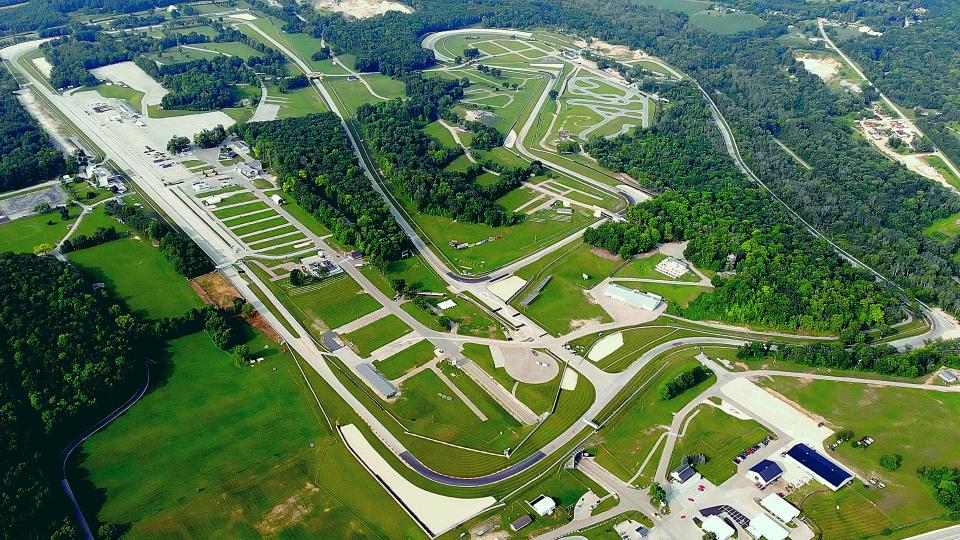
But the season also produced one of its most dramatic moments at Road America in Wisconsin — Harley’s home track. In Saturday qualifying, Wyman shattered his own lap record by nearly two seconds. All three Harley factory riders locked out the front row. In the race, they finished first, second, and third — a factory sweep in front of a home crowd that included Willie G. Davidson himself.
Then came the technical inspection.
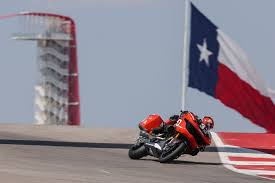
Bradley Smith was disqualified. As reported at the time by both Hot Bike Magazine and American Rider, officials found that his Road Glide had exceeded the 7,000 rpm rev limit during the race, in violation of Article 2.7.4. Harley appealed. The appeal failed. The result stood.
What that disqualification told you, more clearly than any lap time could, was that 7,000 rpm was not a comfortable limit for the Milwaukee-Eight race engine — it was the absolute ceiling. The team was operating right at the edge of what the rules allowed, and on that particular circuit, on that particular lap, one bike went fractionally beyond it.
That matters enormously in understanding what happened next.
2026: A New Partnership Changes Everything
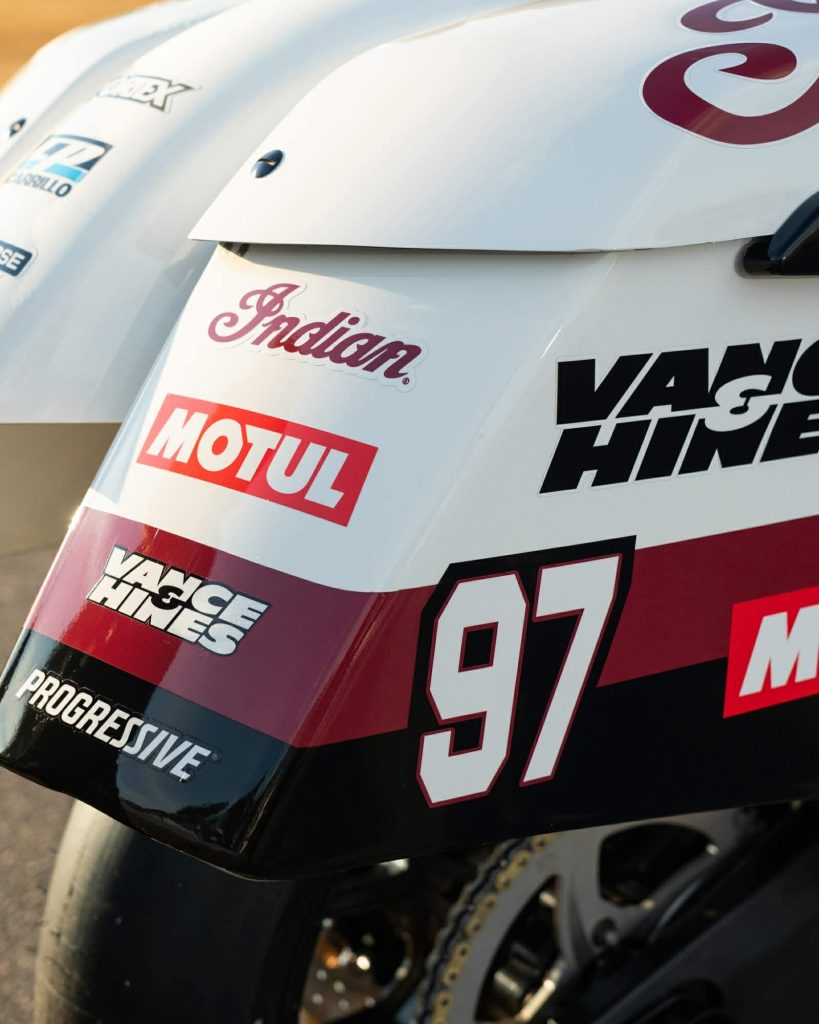
Indian arrived at the start of 2026 with a significant change. After years competing with S&S Cycle as their technical partner, Indian Motorcycle announced a multi-year factory partnership with Vance & Hines — one of the most respected performance engineering operations in American motorsport, and a company that had previously worked extensively with Harley-Davidson. The knowledge they brought to the Indian Challenger platform was immediately evident.
The results since Daytona have not been close. They have been emphatic.
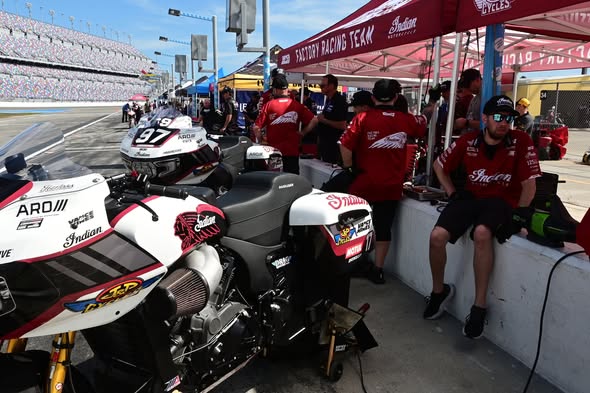
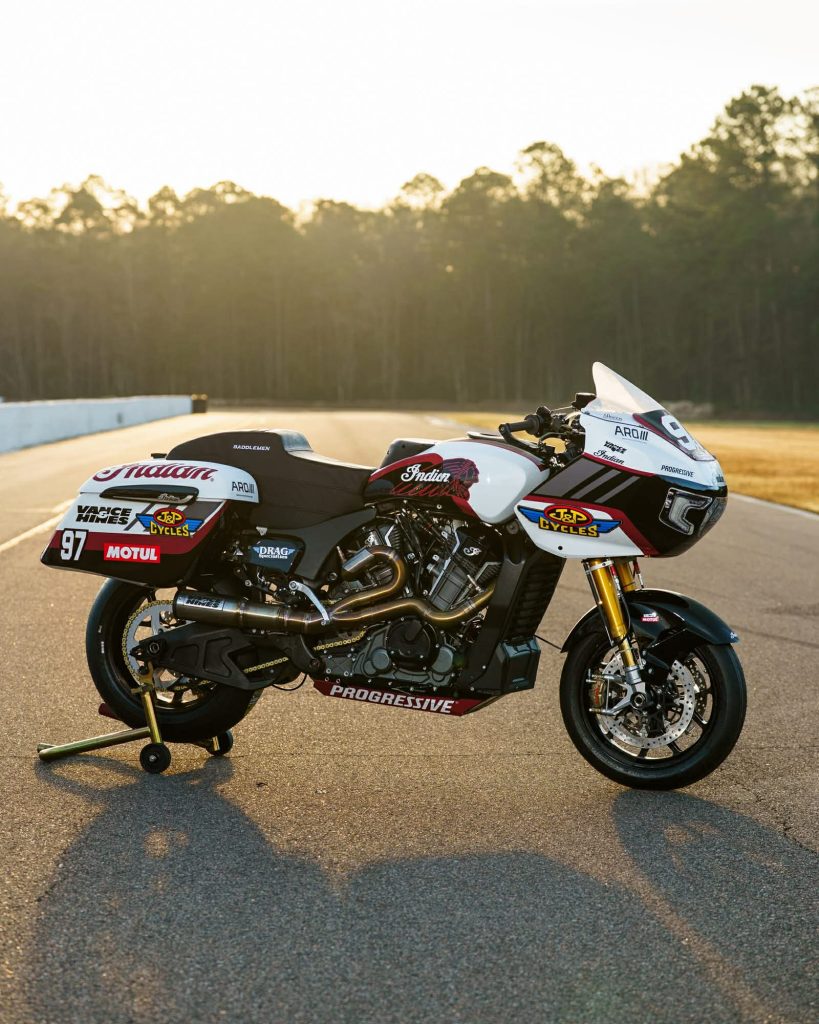
2026 Mission King of the Baggers — Race Results to Date
Round 1 — Daytona International Speedway, Florida (March 5–7)
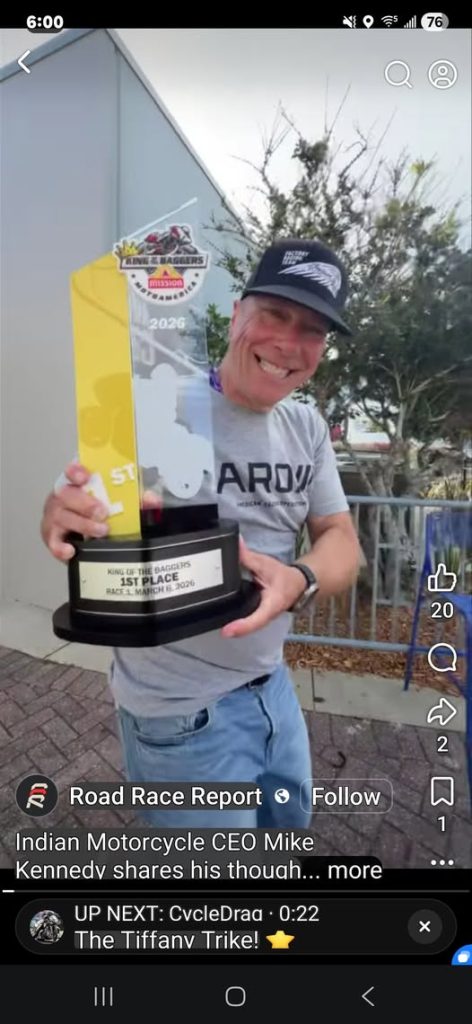
Race 1 — Saturday: Hayden Gillim (Indian), Troy Herfoss (Indian), Kyle Wyman (Harley) Race 2 — Sunday: Troy Herfoss (Indian), Rocco Landers (Indian), Kyle Wyman (Harley)
Round 2 — Michelin Raceway Road Atlanta, Georgia (April 17–19)
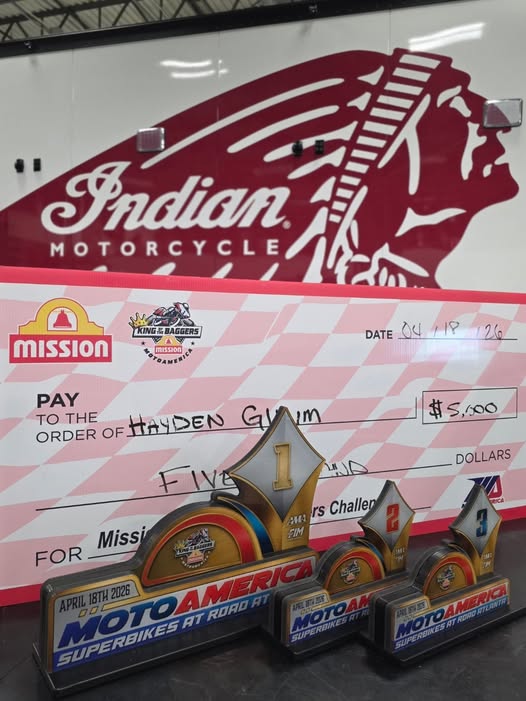
Race 1 — Saturday: Hayden Gillim (Indian), Troy Herfoss (Indian), Bradley Smith (Harley) Race 2 — Sunday: Hayden Gillim (Indian), Rocco Landers (Indian), Troy Herfoss (Indian)
Four races. Four Indian wins. In Race 2 at Road Atlanta, Indian locked out the entire podium. Harley’s best finisher, Bradley Smith, was fourth. Defending champion Kyle Wyman crashed out on the first lap and did not finish.
Those results are not the output of a machine operating with a marginal advantage. They are the output of a machine operating in a different performance category to its competitor. The Vance & Hines development programme did not just close a gap — it opened one. And the straight-line speed data told the same story every single time the two machines shared a circuit.
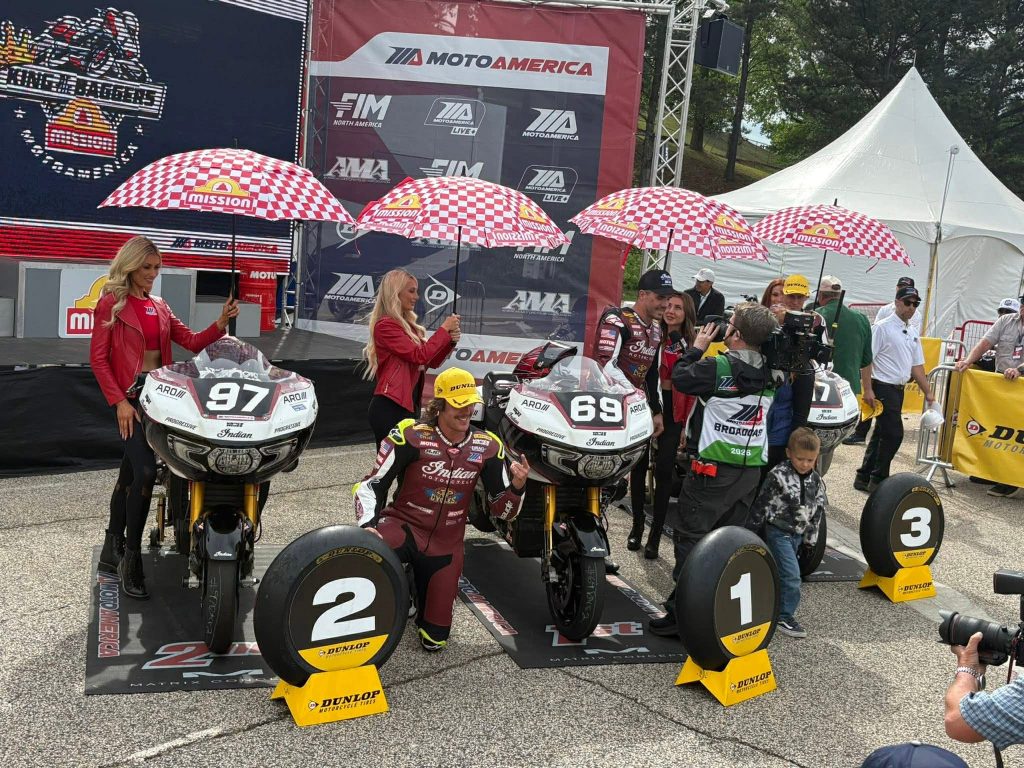
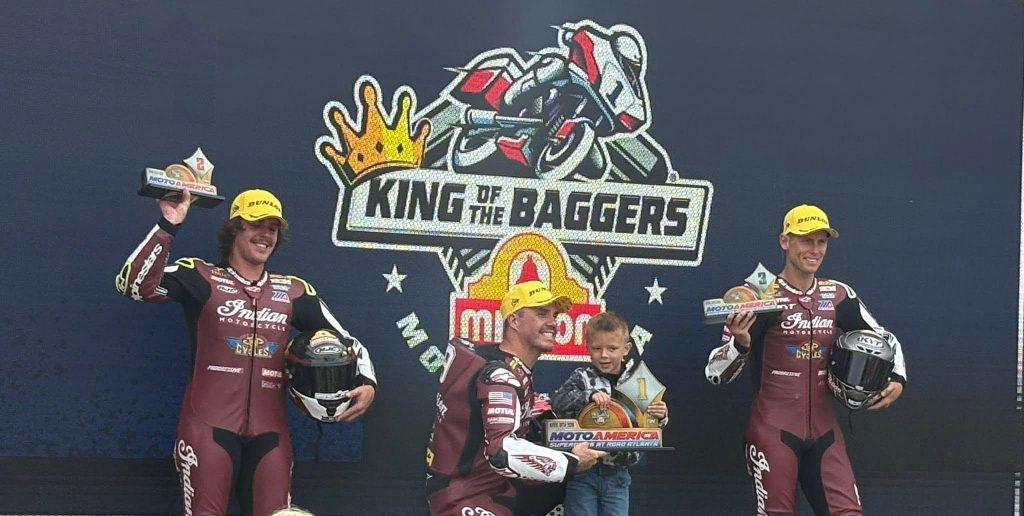
The speed advantage was not just visible in the results. It was measurable on the straights at both Daytona and Road Atlanta, and had already been evident at the pre-season Dunlop tyre test. The Challenger, with Vance & Hines development behind it, was pulling away from the Road Glide in a way that the existing rev limit gap alone could not explain.
MotoAmerica was watching the data. On 1 May 2026 — May Day, as their own published headline noted with a certain dry humour — MotoAmerica Technical Bulletin 02-5000-26 was issued. After four races in which an Indian Challenger had stood on the top step of the podium every single time, Harley’s rev limit was raised from 7,000 to 7,200 rpm. Indian’s remained at 7,700 rpm.
The timing is worth sitting with for a moment. Not at the end of the season. Not before the season started. Mid-season. After four races. After the results had made the argument impossible to ignore.
Is It Fair? The Question Every Indian Owner Is Asking
Here is where the question becomes uncomfortable — and where the results table above, and the history of the FTR750 and the FTR1200, make it impossible to ignore.
A casual observer might look at Indian still holding a 500 rpm advantage over Harley and conclude that Indian retains the upper hand. That reading misses the point entirely — and the results prove it. The Indian PowerPlus has always been permitted more revs than the Milwaukee-Eight specifically because it has a smaller engine. That gap is not an advantage; it is the compensation that makes the two machines competitive at all. The fact that Indian is winning every race despite that compensation being in place tells you everything about where the real performance advantage currently lies.
Consider also what the Harley’s rev limit actually means in practice. In 2025, Bradley Smith was disqualified at Road America for exceeding the 7,000 rpm ceiling. The Milwaukee-Eight 131 was already being pushed to its absolute limit. It had no headroom left. The Indian PowerPlus, running at 7,700 rpm, was operating comfortably within its permitted range. Vance & Hines then arrived and found more performance within that envelope — not by asking for the rules to be changed, but through engineering. They did the work. They earned the advantage.
And the response, after four races of Indian dominance, was to give Harley 200 more revolutions per minute.
To be clear — this is not an outright advantage for Harley. Indian still runs 500 rpm higher. But that is precisely the point. The gap has been narrowed not because Indian did anything wrong, not because they breached any rule, not because their machinery was found to be non-compliant in any way. It was narrowed because they were winning. That is a distinction that matters enormously, and it is one that deserves to be stated plainly.
MotoAmerica will tell you — correctly — that this is what competitive balance management looks like. That they adjust in both directions. That the series is designed around two fundamentally different machines and keeping them close requires constant calibration. All of that is true, and none of it is dishonest.
But the question this Indian owner is entitled to ask is this: when Indian was being outperformed in 2024 and 2025, did MotoAmerica intervene mid-season to adjust the rules in Indian’s favour? When Wyman swept to the 2025 title, was a technical bulletin issued to give the Challenger more headroom? The answer, as far as the record shows, is no. The adjustments flowed one way. And now, four races into a season in which Indian is dominant, they flow the other.
What is harder to dismiss is the pattern — or at least, what looks like one. In American Flat Track, Indian built the FTR750 to a standard nobody else could match, within the rules as they existed. The rules changed, the bike was eliminated, and Harley returned to winning. In Super Hooligan racing, the FTR1200 competed at the front of a series Indian had helped build, until the machine was discontinued and the series moved on. Now in King of the Baggers, Indian arrives with a transformative technical partnership, immediately demonstrates a performance advantage verified across four races and a pre-season tyre test, and within two rounds a technical bulletin adjusts the rules in Harley’s favour. Each of those events has an individual explanation. Taken together, the timing invites questions that are hard to ignore.
There is one historical precedent that casts a long shadow over all of this. In the 1980s, when Honda’s RS750 proved dominant over Harley’s XR750 in flat track racing, the AMA restricted the Hondas in a move widely attributed at the time to pressure from Harley-Davidson — a belief that has persisted among paddock insiders for decades. Whether or not that attribution is fully provable, the outcome is not in dispute: Honda left the sport, and an era of largely unchallenged Harley dominance followed that most observers now agree was not good for flat track racing as a spectacle. Nobody is suggesting that the same pressure is being applied now. But the echoes are there, and Indian owners — who have watched this pattern play out across three different disciplines in less than a decade — are entitled to ask the question out loud.
What the Rev Limit Change Actually Means for the Racing
Set aside the politics for a moment and consider what the rule change means on track. If the 200 rpm increase works as intended — closing the straight-line speed gap without handing Harley an outright advantage — then the racing from Road America onwards should be closer than the first four rounds have been. Indian’s Vance & Hines Challenger versus Harley’s Milwaukee-Eight 131 at 7,200 rpm, over circuits that test both the short-stroke Indian’s corner speed and the big Harley’s brute torque on the exits.
Whether 200 rpm is actually enough is the real question. The performance gap in the first four races was not marginal — it was dominant. A 200 rpm increase in the rev ceiling of an air-cooled pushrod engine that was already at its limit does not automatically translate into the same level of performance gain that Vance & Hines unlocked through a full winter of development on a modern liquid-cooled architecture. The figures may close on paper. What happens on the track at Road America on 29 May will tell the real story.
What is not in doubt is the rider quality on both sides. Kyle Wyman carries the number one plate and more King of the Baggers victories than anyone in the series’ history. Hayden Gillim has won three of the four races run so far in 2026, taking Race 1 at Daytona and both races at Road Atlanta, and is riding with the kind of confidence that comes from a machine working exactly as it should. Troy Herfoss, the 2024 champion, won Race 2 at Daytona and finished second at Road Atlanta and knows how to build a title challenge. And Bradley Smith — now in his second full season and carrying the experience of 119 MotoGP starts — took his first KOTB podium at Road Atlanta and will only be stronger at circuits he already knows.
The championship is alive. The rev limit change has not handed it to anyone. What it has done is ensure that Road America becomes the most important test of the 2026 season — and one of the most significant weekends in the ongoing story of Indian Motorcycle in American racing.
The Bigger Picture
The salt flats story, and the full extraordinary tale of what Indian built with the FTR750 and what it meant for the brand, deserves its own dedicated feature — and that is coming. What those chapters add to this story is a simple truth: Indian Motorcycle, under whatever ownership and in whatever era, has consistently arrived in racing with genuine engineering ambition, produced machines that redefined what was possible in their class, and found the ceiling of what the rules would permit pressed down upon them.
Whether you read that as a sanctioning body doing its job, or as something more uncomfortable, may depend on which side of the Harley-Indian fence you stand on. But it is a question worth asking — loudly, and in public.
Because the alternative — a King of the Baggers series in which one manufacturer holds a systematic, unchallenged advantage season after season — is the one outcome that would kill the series entirely. And that, at least, is something both Indian and Harley fans can agree they do not want.
The next chapter starts at Road America on 29 May. Watch carefully.