Indian Motocycle Riders Global
The Brockhouse era (1955–1960)
The Motorcycles
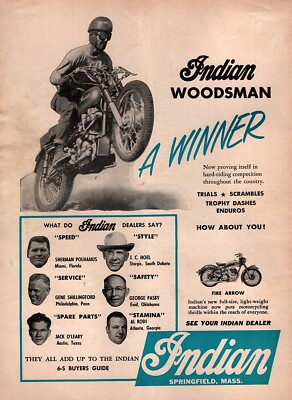
The Woodsman (1955–1959)
Introduced in 1955, the Indian Woodsman was essentially a Royal Enfield Bullet 500 adapted for the growing American scrambles and trail-riding scene.
Specifications & Features
Engine: 499cc OHV single-cylinder (≈30 hp)
Construction: Alloy barrel with cast-iron liner
Transmission: 4-speed Albion gearbox
Electrics: Lucas magneto and dynamo
Wheels: 21-inch front, 19-inch rear
Equipment:
High-level exhaust
Skid plate
QD (quick-detach) lighting system
The QD lighting allowed riders to remove the lights quickly, converting the bike from a weekday commuter into a weekend competition machine. In this form, the Woodsman became one of the earliest factory-marketed dual-purpose motorcycles in the United States.

The Westerner (1958–1959)
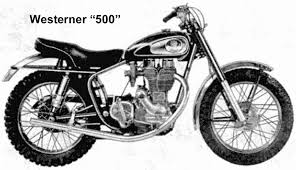
By 1958, the range expanded to include the Indian Westerner, a more competition-focused sibling of the Woodsman.
No lighting equipment
Revised forks
19-inch wheels front and rear
Internally at Royal Enfield, the Westerner was sometimes referred to as the “West Coast Woodsman”, a term that later contributed to naming confusion. In practice, it represented a lighter, more focused scrambles machine aimed squarely at off-road competition rather than mixed road use.
The Woodsman and Westerner continued with only minor annual changes until around 1959, disappearing as Brockhouse’s use of the Indian name came to an end.
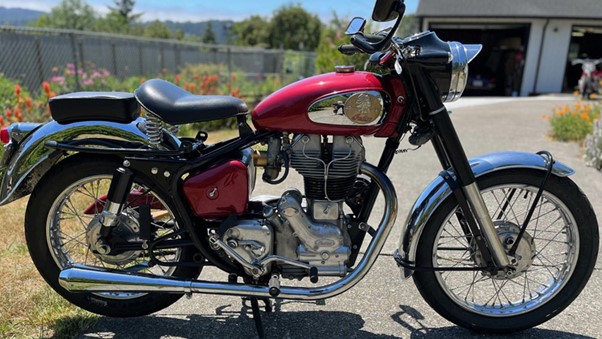
Hounds Arrow (250cc) 1955
The Indian Hounds Arrow
Introduced during the Brockhouse era, when Brockhouse Engineering used the Indian name to market rebadged Royal Enfield motorcycles in the United States. The Hounds Arrow was based directly on the Royal Enfield Clipper 250 and positioned as an entry-level, lightweight roadster.
Years produced: c.1955–1960
Engine: Single-cylinder, OHV
Displacement: 248cc
Cooling: Air-cooled
Power: approx. 16–18 hp
Carburetion: Amal carburettor
Transmission: 4-speed manual
Final drive: Chain
Ignition: Lucas magneto
Electrics: Lucas dynamo (6-volt)
Frame: Tubular steel, rigid rear frame (with optional sprung saddle)
Front suspension: Telescopic forks
Brakes: Drum front and rear
Top speed: approx. 65–70 mph
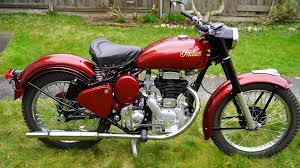
Indian Fire Arrow (1955–1960)
The Indian Fire Arrow was the sport-oriented companion to the Hounds Arrow, offered during the Brockhouse period when Brockhouse Engineering marketed Indian-badged motorcycles in the U.S. Built by Royal Enfield, the Fire Arrow was based on Royal Enfield’s higher-performance 250cc platform and aimed at riders wanting more speed and sharper response than the entry-level roadster.
Years produced: c.1955–1960
Engine: Single-cylinder, OHV
Displacement: 248cc
Cooling: Air-cooled
Compression: Higher than Hounds Arrow (sport specification)
Power: approx. 18–20 hp
Carburetion: Amal carburettor (larger bore than Hounds Arrow)
Transmission: 4-speed manual
Final drive: Chain
Ignition: Lucas magneto
Electrics: Lucas dynamo (6-volt)
Frame: Tubular steel, rigid rear (sprung saddle common)
Front suspension: Telescopic forks
Brakes: Drum front and rear
Top speed: approx. 70–75 mph
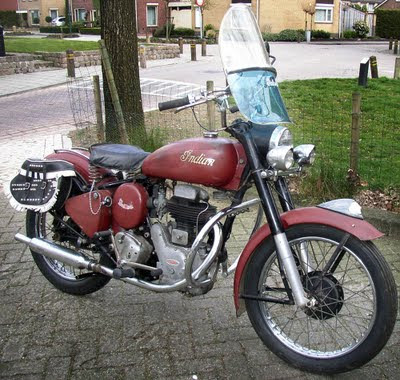
Indian Trailblazer (1955–1960)
The Indian Trailblazer was Brockhouse’s attempt to place the Indian name back into the large-capacity American touring market during the late 1950s. Marketed by Brockhouse Engineering and built by Royal Enfield, the Trailblazer was based on the Royal Enfield Super Meteor 700.
It was aimed squarely at riders who wanted a big, smooth road motorcycle positioned as an alternative to Harley-Davidson’s big twins, though it shared no mechanical lineage with the original Springfield-built Indian Chiefs.
Years produced: c.1955–1960
Engine: Parallel twin, OHV
Displacement: 692cc
Cooling: Air-cooled
Power: approx. 40 hp
Carburetion: Twin Amal carburettors
Transmission: 4-speed manual
Final drive: Chain
Ignition: Lucas magneto
Electrics: Lucas dynamo (6-volt)
Frame: Tubular steel, rigid rear frame
Front suspension: Telescopic forks
Brakes: Drum front and rear
Top speed: approx. 90–100 mph
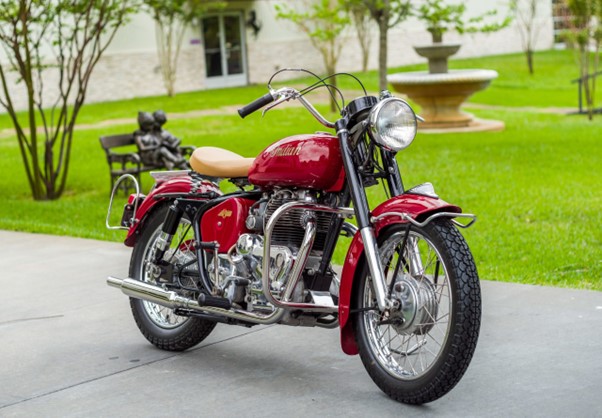
Indian Apache (1955–1960)
The Indian Apache was the higher-performance, sport-focused counterpart to the Trailblazer. Marketed by Brockhouse Engineering and built by Royal Enfield, it was derived from the same Royal Enfield big-twin platform as the Super Meteor but tuned and presented for riders seeking greater speed and sharper road manners.
While the Trailblazer targeted long-distance touring, the Apache aimed to give the Indian badge a sporting edge in the large-capacity class during the late 1950s.
Years produced: c.1955–1960
Engine: Parallel twin, OHV
Displacement: 692cc
Cooling: Air-cooled
Power: approx. 42–45 hp (higher output than Trailblazer)
Carburetion: Twin Amal carburettors (sport tuning)
Transmission: 4-speed manual
Final drive: Chain
Ignition: Lucas magneto
Electrics: Lucas dynamo (6-volt)
Frame: Tubular steel, rigid rear frame
Front suspension: Telescopic forks
Brakes: Drum front and rear
Top speed: approx. 100 mph (depending on gearing)
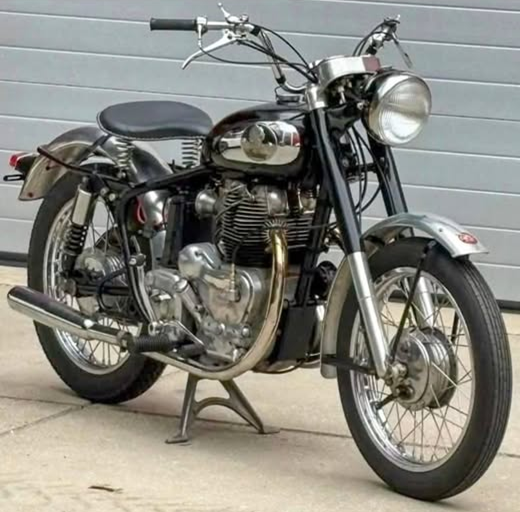
Indian Tomahawk (1955–1960)
The Indian Tomahawk filled the middle ground in the Brockhouse Indian lineup. Marketed by Brockhouse Engineering and built by Royal Enfield, it was derived from the Royal Enfield Meteor 500 and offered a balance between the lightweight singles and the large 700cc twins.
The Tomahawk was aimed at riders who wanted twin-cylinder smoothness without the size, weight, or cost of the Trailblazer or Apache.
Years produced: c.1955–1960
Engine: Parallel twin, OHV
Displacement: 497cc
Cooling: Air-cooled
Power: approx. 28–30 hp
Carburetion: Twin Amal carburettors
Transmission: 4-speed manual
Final drive: Chain
Ignition: Lucas magneto
Electrics: Lucas dynamo (6-volt)
Frame: Tubular steel, rigid rear frame
Front suspension: Telescopic forks
Brakes: Drum front and rear
Top speed: approx. 80–85 mph

Indian Chief (700cc) – Brockhouse Era (1955–1960)
The Indian Chief (700cc) of the Brockhouse era was the most controversial motorcycle sold under the Indian name after the closure of the Springfield factory. Marketed by Brockhouse Engineering and built by Royal Enfield, it was mechanically based on the Royal Enfield Super Meteor / Constellation.
To capitalise on Indian’s heritage, Brockhouse revived the Chief name and applied valanced fenders and Indian styling cues intended to visually echo the iconic Springfield Chief—despite there being no mechanical, manufacturing, or engineering connection to the original Indian V-twin.
Years produced: c.1955–1960
Engine: Parallel twin, OHV
Displacement: 692cc
Cooling: Air-cooled
Power: approx. 50–52 hp (Constellation specification)
Carburetion: Twin Amal carburettors
Transmission: 4-speed manual
Final drive: Chain
Ignition: Lucas magneto
Electrics: Lucas dynamo (6-volt)
Frame: Tubular steel, rigid rear frame
Front suspension: Telescopic forks
Brakes: Drum front and rear
Top speed: approx. 100 mph
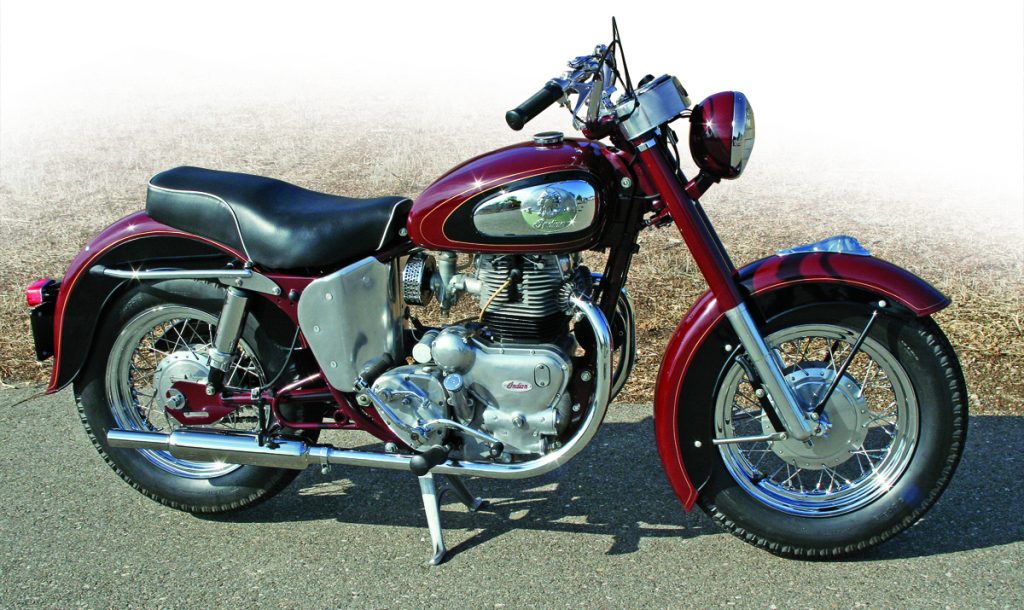
Indian Fury (500cc) – Brockhouse Era (1955–1960)
The Indian Fury was a sportier 500cc parallel twin, marketed during the Brockhouse era as a performance-oriented alternative to the Tomahawk. Built by Royal Enfield and sold under the Indian name by Brockhouse Engineering, it was derived from Royal Enfield’s higher-output 500cc twin platform.
Years produced: c.1956–1960
Engine: Parallel twin, OHV
Displacement: 497cc
Cooling: Air-cooled
Power: approx. 32–34 hp
Carburetion: Twin Amal carburettors
Transmission: 4-speed manual
Final drive: Chain
Ignition: Lucas magneto
Electrics: Lucas dynamo (6-volt)
Frame: Tubular steel, rigid rear frame
Front suspension: Telescopic forks
Brakes: Drum front and rear
Top speed: approx. 90 mph
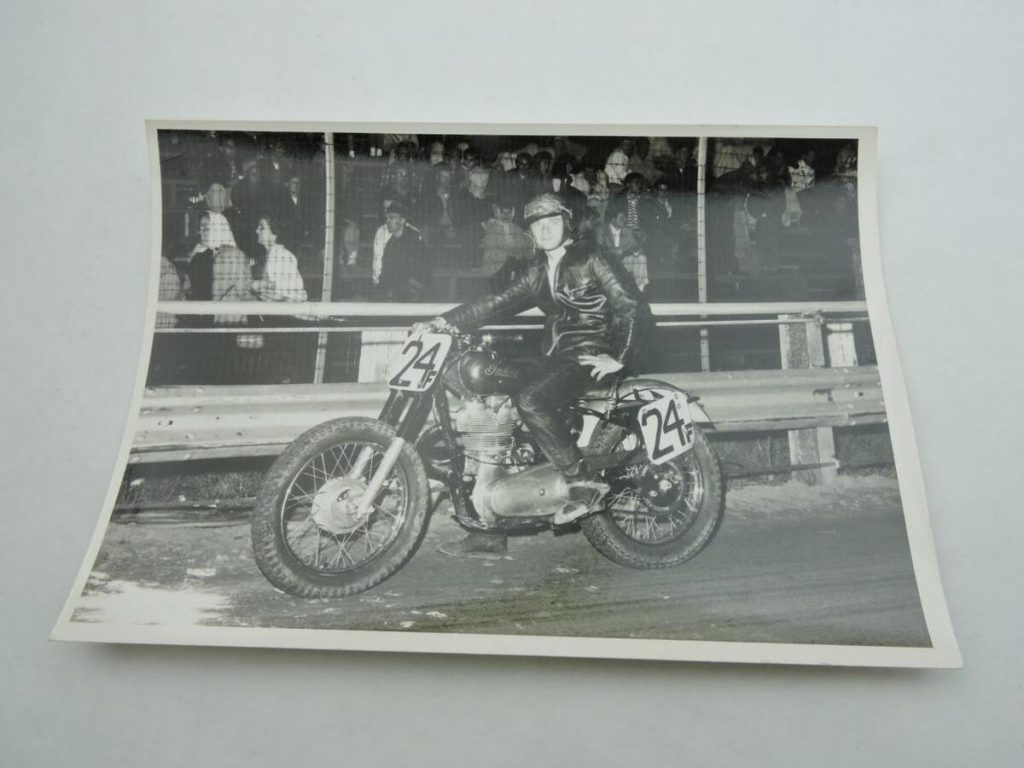
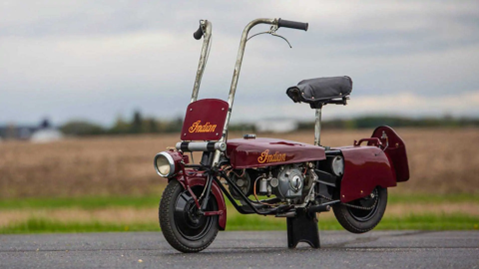
Indian Papoose (1955–1959)
The Indian Papoose was a small, lightweight scooter sold under the Indian name during the Brockhouse period, when Brockhouse Engineering controlled the Indian trademark. Unlike the motorcycles in the Brockhouse range, the Papoose was not built by Royal Enfield.
Instead, it was a rebadged version of the British Corgi scooter, itself derived from the wartime Welbike developed for British airborne forces during World War II.
The Papoose was marketed as an ultra-light, economical runabout, aimed at commuters, urban riders, and first-time users rather than traditional motorcycle enthusiasts.
Years sold: c.1955–1959
Type: Scooter / lightweight utility machine
Engine: Single-cylinder, two-stroke
Displacement: 98cc
Cooling: Air-cooled
Carburetion: Amal carburettor
Transmission: Single-speed with centrifugal clutch
Final drive: Chain
Ignition: Coil ignition
Frame: Tubular steel
Wheels: Small-diameter steel rims
Top speed: approx. 30–35 mph
© IMRGlobal 2025